The Corpse Flower of the Jungle: Inside the Life of Rafflesia
 0
0
 0
0
 0
0
0
0
Imagine meeting a flower that could eat your reputation alive faster than a gossiping aunt at a family braai. You stroll through the jungle, hoping for orchids, butterflies, maybe even a monkey swinging about, and instead you find the Rafflesia flower: the botanical equivalent of someone who loudly farts during yoga. It’s huge, it’s strange, and it smells like something died in its petals. Romantic, right?

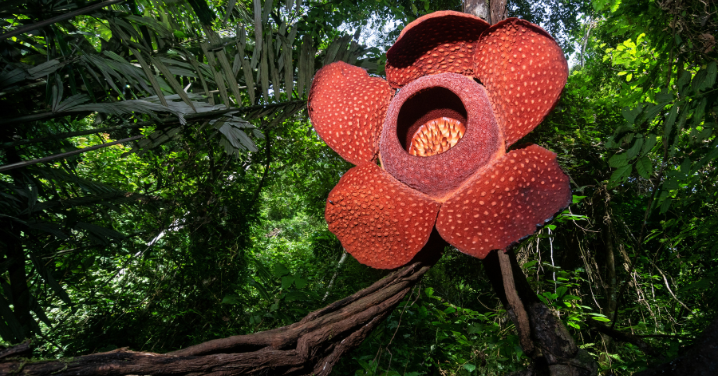
Let’s start with its appearance. The Rafflesia doesn’t believe in subtlety. This is the largest individual flower in the world, stretching up to a metre across and weighing as much as your dog, or at least that gym bag you keep promising to use. Its petals are thick and leathery, splashed with mottled red and white, like a giant pizza that went mouldy but nobody wanted to throw away. And if the look doesn’t impress you, the smell certainly will. Botanists describe it as “corpse-like,” which is a polite way of saying it reeks worse than a forgotten boerie roll under your car seat.
Now, why would a flower want to smell like a decomposing wildebeest? Cleverness, my friend. While roses seduce bees with sweet nectar and sunflowers charm with golden faces, Rafflesia has taken a darker path. It attracts flies, the unsung heroes of the trash heap. These flies mistake the stench for a fresh buffet of rot and, while bumbling around, end up pollinating the flower. Basically, the Rafflesia figured out that flies are easy to fool, and we’re all just living in its twisted rom-com.
Here’s another kicker: the Rafflesia doesn’t even have leaves, stems, or roots like a normal plant. No, this diva lives as a parasite inside a vine, hiding out like a couch surfer who never pays rent, until it bursts out in full, smelly glory. That’s right, this flower is not just unusual, it’s a complete freeloader. If plants had WhatsApp groups, Rafflesia would definitely be the one ghosting messages and then showing up only when there’s free food.
But as much as we can laugh at its antics, there’s something oddly admirable about this strange plant. The Rafflesia has survived millions of years by being exactly what it is: bizarre, smelly, unapologetic. It’s not here to fit into your bouquet or win you Valentine’s points. It exists purely on its own terms, and in a world obsessed with roses and tulips, that’s kind of brilliant. Maybe there’s a lesson in there for us: sometimes standing out requires a bit of audacity, even if it means being the weirdo in the room who smells questionable.

And despite all its grotesque charm, the Rafflesia is endangered. Deforestation, habitat loss, and people trampling around jungles hoping for selfies with the world’s stinkiest superstar have all put it at risk. Which makes you wonder: we humans complain about how gross it is, yet we’re the ones pushing it closer to extinction. That feels a bit like complaining about the neighbour’s noisy dog and then kicking down the fence so it runs into the street. The flower might be strange, but the real problem here is us.
So the next time you see a perfectly groomed rose bush or a shiny bouquet at Checkers, spare a thought for the Rafflesia lurking deep in the jungle, doing its best impression of roadkill while quietly rewriting the rules of what a flower can be. Not everything beautiful smells good, and not everything smelly deserves to be ignored. In the end, the Rafflesia reminds us that sometimes the strangest, most uncomfortable things in life are the ones worth paying attention to. And if nothing else, it proves that Mother Nature definitely has a sense of humour, one that borders on the grotesque.
Some people bring roses on dates. I’d bring a Rafflesia. If you can handle that stench and still sit across from me, you’re probably a keeper.