
Black Coral Alocasia: The Gothic Masterpiece of the Plant World
 0
0
 0
0
 0
0
0
0
There are plants that beg to be loved with cheerful green leaves, bright blooms, and an almost eager need to please. Then there is Black Coral Alocasia. This isn’t your smiling, sunlit, easy-going plant. This is the moody one in the corner, the one dressed in black with silver veins slashed across its leaves like lightning captured in velvet. It is a plant that doesn’t need to try. It simply exists, and in its existence, it declares itself extraordinary.
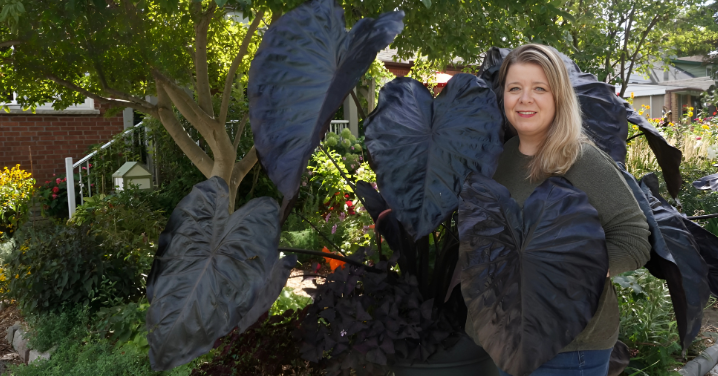
The Black Coral Alocasia belongs to the Elephant Ear family, and you’ll see why if you’ve ever stood next to one. Its leaves are large, dramatic, almost sculptural, unfurling like a cape from some gothic fairytale villain. But instead of bright tropical greens, these leaves are so deep a shade of black-green they appear otherworldly. The veins flash in contrast, pale and metallic, like silver in moonlight. It is not a flower that tries to charm. It is a plant that commands.


What I love about this Alocasia is how unapologetically itself it is. In a world where we’ve been conditioned to equate plants with life, brightness, greenery, and joy, here comes Black Coral, leaning against the wall in the shadows, reminding us that life is not always bright. Beauty can live in the darkness too. You don’t need to be cheerful to matter. You don’t need to be loud to be seen. Sometimes, just existing boldly, differently, is enough.
There’s something deeply human in that. How often have we been told to be palatable, approachable, friendly? Be the green fern on the windowsill, not the brooding figure in the corner. And yet, some of us simply aren’t built to be that. Some of us carry shadows. Some of us thrive in them. The Black Coral Alocasia doesn’t just grow—it flourishes in its darkness, and in doing so, it forces us to re-examine what we call beautiful.
Houseplant culture has elevated this Alocasia to near-mythic status. Collectors covet it, influencers pose with it, and nurseries sell it as if it were a rare piece of art. And in many ways, it is. Its presence transforms a room. Put a Black Coral in a corner and suddenly that corner has depth, drama, and a story. Unlike cheerful pothos that drape themselves over anything, this plant holds its own. You can’t really ignore it. You either love it or you’re intimidated by it, but you never forget it.
And isn’t that what many of us secretly long for—not to be liked by everyone, but to be unforgettable to a few? The Black Coral doesn’t care if you don’t like its darkness. It doesn’t need your approval. It knows it’s beautiful, and it knows you’ll come around eventually. That kind of confidence is magnetic, even if it makes you slightly uncomfortable.
Of course, being magnetic doesn’t mean being easy. If you’ve ever tried to grow one, you’ll know that Black Coral Alocasia is fussy. It likes humidity but not too much water, warmth but not scorching heat, light but not direct sun. It wants care on its own terms. It is not your low-maintenance, forgiving succulent. It will punish neglect with crisp edges and drooping leaves. It will sulk if moved too often. It is, in every sense, a plant with boundaries.
There’s a lesson there too, isn’t there? Boundaries are not flaws. Boundaries are a sign of self-knowledge. The Alocasia knows what it needs and refuses to settle for less. If we were as clear about our needs, maybe we’d stop burning ourselves out trying to be everything for everyone. The Black Coral says, “This is how I thrive. Take it or leave it.” It is a plant that practices self-care by default.
And yes, that comes with complications. Not everyone can handle its demands. Some will try and fail. Some will give up entirely. And yet, for those who take the time to learn its rhythms, the reward is immense. To walk into a room and see those inky leaves glinting with veins of silver—it’s like living with a work of art that also happens to be alive. You don’t just grow a Black Coral Alocasia. You earn it.
I think about that a lot when I consider how we measure value. Easy is often mistaken for good. Difficult is often mistaken for not worth the trouble. But sometimes the things that ask the most of us are the ones that give back the deepest satisfaction. Raising this plant is like being in a relationship with someone complex, someone who doesn’t just smile and nod but pushes you to grow, to pay attention, to actually show up. The relationship may not be simple, but it’s richer for it.
There’s also an undeniable poetry to the colour itself. Black in nature is rare, especially in plants. Most leaves are green because of chlorophyll, the molecule that captures light for photosynthesis. For a plant to appear almost black, it layers pigments in ways that absorb and bend light differently. It doesn’t simply reflect the sun—it drinks it in, transforms it, and emerges darker, bolder. There is science in this, yes, but there is also metaphor. To stand in the light and yet choose to hold onto the dark is a kind of quiet rebellion.
And perhaps that’s why the Black Coral resonates so much. It embodies contradiction: life that looks like shadow, growth that feels like defiance, beauty that doesn’t need to be obvious. It reminds us that not all thriving is about brightness. Some of it happens in the quiet, in the introspective, in the places others might dismiss as gloomy.
I imagine someone walking into a room filled with bright greenery, and then their eyes land on this dark giant. That moment of pause, of intrigue, is what art does to us. It unsettles us just enough to make us think differently. Black Coral Alocasia is a plant, yes, but it’s also a statement: that there is dignity in difference, power in not conforming, and allure in the shadows.
And maybe, just maybe, we need more of that in our own lives. We spend so much time curating light, joy, positivity—as though life can ever be only those things. But what about the parts of us that are dark? The griefs we carry, the scars we hide, the moods we feel ashamed of? The Black Coral Alocasia whispers that those parts are not just acceptable, but beautiful. It doesn’t apologise for its darkness, and neither should we.
Still, it’s not just philosophy. The Black Coral is practical in its own way too. Like other Alocasias, it’s an air-purifying plant, quietly working to clean the space it inhabits. There’s irony in that: a plant so dark in appearance, so gothic in vibe, is actually making the air fresher, healthier. It reminds me that appearances are never the whole truth. A brooding exterior can hide kindness. A dark façade can shelter light within.
And yes, it’s not for everyone. Some will prefer their cheerful daisies and bright palms. That’s fine. Not every plant is for every person, just as not every person is for every life. But for those who find themselves drawn to it, the Black Coral Alocasia is a companion that affirms their own sense of being different. It is the plant for those who see beauty in what others might call strange.
In the end, the Black Coral Alocasia is not just décor. It is presence. It is art. It is metaphor. It is a living reminder that light and shadow are not enemies but partners, that growth can happen in unexpected ways, and that beauty is not always obvious, but it is always there if we learn to look differently.
So if you ever find yourself standing in front of one, take a moment. Notice how the veins glint, how the darkness pulls you in, how the plant seems to hold a kind of quiet authority. Let it remind you that your shadows are not a weakness. They are part of your beauty. They are part of your story. Just like the Black Coral Alocasia, you don’t have to be bright to be unforgettable.