
The Surprisingly Wild History Of Toilet Paper
 0
0
 0
0
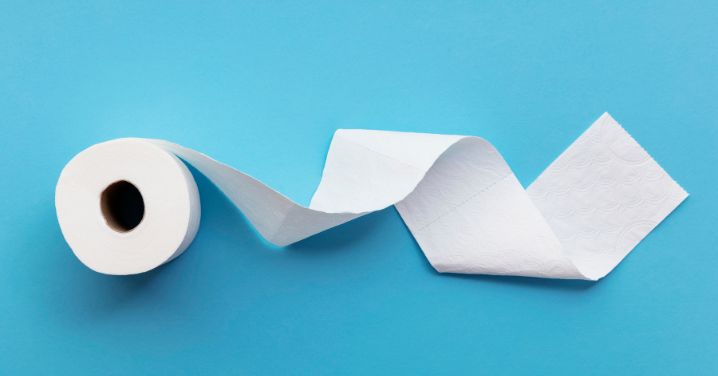 0
0
0
0
Toilet paper is one of those inventions we take for granted. Nobody wakes up grateful for the roll in the bathroom. Nobody stands in Checkers staring at a two ply pack thinking this is civilisation at its finest. Toilet paper is one of those silent heroes of daily life. Humble. Ubiquitous. Ready to help at any given moment. But its history, my friend, is absolute chaos.
Human beings, despite our big brains, opposable thumbs, and dramatic confidence in our own brilliance, did not always have toilet paper. This becomes painfully obvious when you start looking at what people used before it existed. And let me tell you, nothing prepares you. Humanity was inventive. Humanity was resourceful. Humanity was also slightly unhinged.
The origin of toilet paper, at least in recognisable form, begins in China over a thousand years ago. The earliest recorded reference appears in the sixth century, when a scholar politely noted that paper used for religious writing should never be used for personal cleaning. Which is probably the softest way anyone has ever said please stop wiping your backside with sacred texts. Chinese manufacturers started producing paper specifically for bathroom use by the fourteenth century, and by 1393 the imperial family received giant sheets of specially made toilet paper. Imagine being so fancy that your bathroom gets custom editions.
China was ahead of the curve. The rest of the world, however, was still deep in the wilderness of improvisation.
Let us start with ancient Rome, a place famous for engineering marvels, aqueducts, and indoor heating. You would assume the Romans would also innovate something gentle for their daily ablutions. You would be mistaken. They used a communal sponge on a stick. A single sponge. Shared. Between everyone. Imagine the neighbourhood WhatsApp group but for hygiene. The sponge lived in a bucket filled with vinegar or salt water. It was rinsed between uses, which technically counts as cleaning, but the idea still arrives in the mind with the grace of a falling brick.
Ancient Greece had a different method. They used smooth ceramic fragments. Literally stones. Rounded, polished, and intended for the job. Archaeologists have even found pieces inscribed with the names of enemies. Which means at some point in history someone looked at a person they disliked and thought I know exactly what to do with your name. Humans have been petty since forever.
Then there are medieval Europeans. These brave, hardy souls pushed through everyday life with an enthusiasm that had nothing to do with hygiene. Their methods varied wildly. Moss. Leaves. Scraps of cloth. Sometimes hay. In colder climates, snow was a common choice. Yes, snow. Nature’s version of an ice bath for your dignity. Castle dwellers used wool or pieces of linen if they were wealthy, while ordinary folk made do with what they could find. Soil was not uncommon. Soil. At this point the only appropriate response is deep respect for how determined humans were to survive at all.
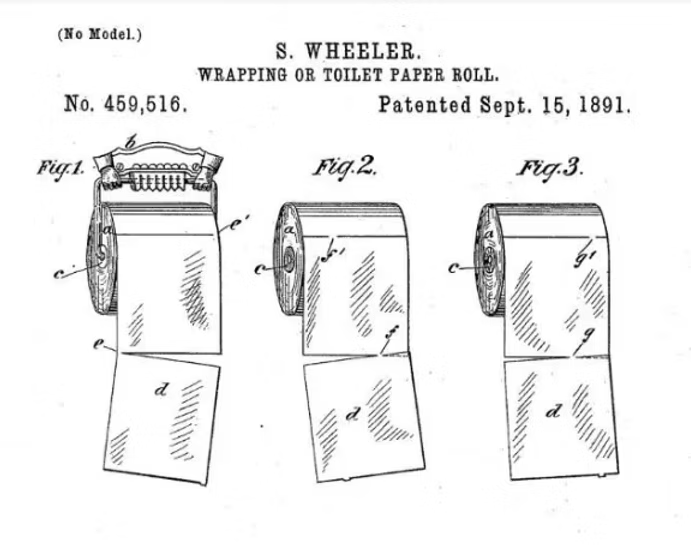
well, here’s the official patent design to settle this debate once and for all.
But there’s more. Always more.
In some parts of the world, seashells were used. Smooth shells, of course, but still shells. There are Pacific Island cultures with records of coconut shells, which sounds like the beginning of a bad dare. In Japan, people used wooden tools called chugi, slender sticks designed for cleaning. They were washed and reused. It seems wooden sticks were a universal favourite because similar tools appeared in other parts of Asia too.
Indigenous cultures adapted materials from their environments. Corn cobs, for example, were used in early America. Farmers kept them in barrels near the outhouse. This is a detail that will live rent free in your imagination now that you have pictured it.
Newspapers arrived later and changed the game completely. They were free, abundant, and readily available. Many households kept old copies beside the toilet. Some even hung them on nails for convenient access. The Sears Roebuck catalogue in the late 1800s was famously repurposed for bathroom needs. It was a household staple until companies began printing glossy pages. Nothing humbles a man quite like discovering that marketing paper outsmarted his plumbing.
So when did the toilet paper we know finally appear.
Modern, perforated toilet paper was introduced in the nineteenth century. Joseph Gayetty is credited with selling the first packaged toilet paper in the United States in 1857. His version came in flat sheets medicated with aloe and marketed as a health product. It did not catch on immediately. Humans, it turns out, are deeply loyal to their moss, leaves, and corn cobs.
The real breakthrough came in the 1870s when the Scott Paper Company began mass producing rolls. These were cheaper, more accessible, and far more convenient. Over time, toilet paper transformed from a luxury to a necessity. By the early twentieth century it became an essential product in Western households. Softness, thickness, and perforation became competitive selling points. Two ply arrived. Then three ply. Then quilted. You know you have reached peak civilisation when companies fight over how soft they can make something designed for a very specific purpose.
But the story of toilet paper gets even better when you consider how reluctant people were to admit they needed it. Early advertisements avoided saying what the product was actually for because Victorian sensibilities were too delicate. Marketers danced around the topic like nervous ballroom dancers. It took decades before people casually accepted toilet paper as something one could speak about in public without fainting.
And yet, despite the silence, the world moved forward. Today toilet paper is so integral to society that the mere hint of shortage can send entire nations into chaos. We have seen it. Humans will fight over a roll with the kind of determination armies dream about.
This tells us something important. Toilet paper is not just a convenience. It is a symbol. A quiet reminder that progress often looks ridiculous in hindsight. The path from communal sponges and ceramic stones to soft triple ply luxury is a journey worth celebrating. It shows that humanity does eventually learn. Slowly. Confused at first. But with a surprising amount of determination.
And the real beauty is that this everyday object still carries the history of all the strange things that came before it. Every roll in your bathroom is part of a lineage that includes snow, moss, shells, sticks, catalogues, and the boldest sponge-sharing arrangement ever recorded. Toilet paper is the punchline to one of history’s longest jokes.
There is a certain comfort in that. A sense that even when civilisation is fumbling around, it eventually figures out a solution that does not involve picking up a stone and hoping for the best. It is a reminder that progress often looks absurd but ends up saving us from ourselves.
Toilet paper might seem simple, but its origin story is anything but. It is a tale of human resilience, questionable judgement, and a universal need that transcends time, culture, and geography. It is the great equaliser. The practical hero. The soft-spoken legend.
So next time you reach for a roll, remember the long, chaotic history that brought it to you. Remember the sponge. Remember the stones. Remember the snow. And remember that somewhere out there is an archaeological team still uncovering evidence that ancient people had solutions they really should have kept secret.