

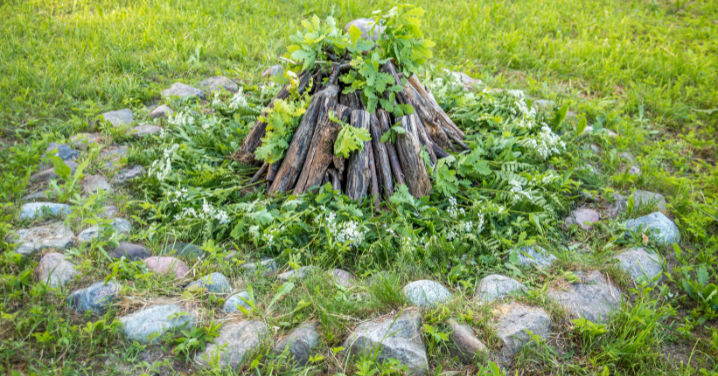
In many spiritual paths, sacredness is reserved for temples, texts, and distant heavens. But for most pagans, the divine isn’t far away or out of reach—it’s under your feet. It’s in the soil, the sky, the turning of seasons, the tide’s pull. The earth isn’t just a backdrop for our lives—it’s alive, it’s powerful, and it’s sacred. And when you start living with that understanding, something shifts. Life slows. Meaning deepens. And the way you move through the world begins to change.
Living in harmony with the earth isn’t about becoming a perfect eco-saint or moving to a cottage in the forest (though hey, no judgement if that’s the dream). It’s about seeing nature as a teacher, a mirror, and a partner—not something to conquer, own, or endlessly extract from. It’s about relationship. Respect. Reciprocity.
Nature doesn’t rush, but it never stops moving. It teaches patience through winter and urgency through spring. It shows us that rest is not weakness, and that decay feeds new life. In pagan practice, this cyclical view of life is central. Life, death, rebirth—it’s not just mythology, it’s truth, lived daily in the natural world. And when we align ourselves with these rhythms, we stop fighting the flow of things. We learn to ebb and bloom like everything else.
To see nature as sacred means recognising that a patch of soil holds wisdom. That a river is more than a resource—it’s an energy, a memory, a lifeline. That a tree isn’t just a piece of landscape—it’s a being, a witness, a quiet presence with something to teach. Pagans often speak of the elements—earth, air, fire, water—not just as concepts but as sacred forces. They’re honoured not because they’re aesthetic, but because they are life.
This reverence often translates into ritual—yes—but also into practice. Into how you eat, consume, waste, walk, and speak. It doesn’t have to be grand. It can be as small as composting, lighting a candle with intention, giving thanks before a meal, planting something, or taking a moment to listen to the wind. Paganism is built on the idea that magic isn’t just something you do—it’s something you live. And living with the earth at the centre of your worldview creates a different kind of magic—quiet, constant, and deeply rooted.
In a world that often prizes convenience over care, this mindset can feel radical. Choosing to slow down. To honour what’s been paved over. To listen when the world shouts. To ask, “What does the land need?” instead of “What can I take from it?” These aren’t always easy questions, but they’re powerful ones.
Living in harmony with the earth also means accepting that we’re part of it—not above it. That we’re not separate from nature, but woven into it. That our wellbeing is linked to the land’s wellbeing. And while no one can live perfectly, we can live more intentionally. That’s the heart of it.
For some, this looks like sustainable living—reducing waste, shopping mindfully, choosing local. For others, it’s about activism, conservation, protecting sacred sites. For many, it’s spiritual—a daily act of tuning in, giving back, saying thank you. And for some, it’s all of the above. There’s no single way to honour nature—only the willingness to show up with respect.
If you’re just starting to explore this way of living, don’t feel overwhelmed. You don’t have to know all the herbs or track every moon phase. You just have to pay attention. Go outside. Notice the season. Feel the air. Learn the names of the trees in your street. Spend time with the land you live on. Even urban spaces hold wildness. Even small rituals create deep connections.
And for allies or the curious, this is one of the most beautiful things to learn about paganism: it invites us to remember. To remember our roots. To remember that we are not above or beyond the world—we are of it. It’s a worldview that invites care, awe, and deep listening.
Because when nature is sacred, the ordinary becomes holy. A morning walk becomes prayer. A garden becomes temple. Rain becomes blessing. And life—messy, imperfect, beautiful life—becomes something to honour, not rush through.