

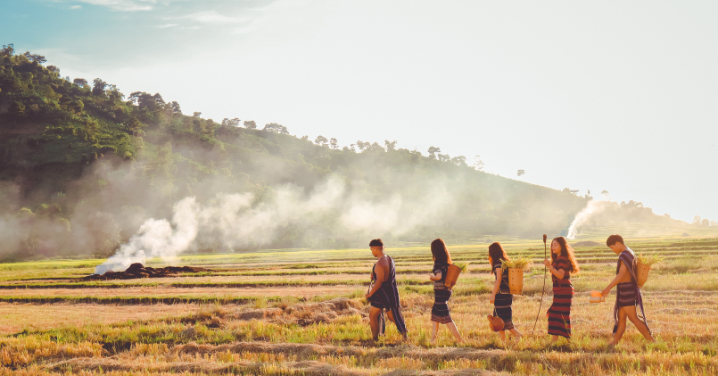
Imagine living in a world without Wi-Fi, streetlights, traffic, or endless queues at Home Affairs. No delivery apps. No TikTok dances. Just the land, your people, your traditions—and nothing else. While the rest of the globe has been busy urbanising and digitising, some of the world’s most isolated tribes have continued living in ways that haven’t changed for hundreds, if not thousands, of years. And while their lifestyles may seem worlds apart from ours, their unique cultures offer rare, powerful insight into humanity at its most raw and resilient.
Take the Sentinelese of North Sentinel Island, for example. This tribe lives in complete voluntary isolation in the Andaman Islands and is fiercely protective of its seclusion. So much so that any outsider attempting contact is typically met with a swift and clear “no thanks”—often in the form of arrows. Their language is unclassified, their population is estimated to be a few dozen to a few hundred, and they have successfully resisted colonisation, missionary attempts, and globalisation. The Indian government has made it illegal to approach the island. This isn’t just about isolation—it’s about autonomy. Cultural survival, on their terms.
Then there’s the Korowai of Papua, Indonesia, some of whom still live in towering treehouses above the rainforest floor. Traditionally semi-nomadic, their structures reach dizzying heights—up to 35 metres—to keep them safe from floods, spirits, and neighbouring clans. The Korowai have a fascinating cosmology, animist beliefs, and a knowledge of the forest that would make most botanists feel underqualified. Though contact has increased in recent years, many Korowai still live in line with ancestral ways, proving that you don’t need an app to thrive in a complex ecosystem.
In the Amazon rainforest, the Mashco-Piro of Peru remain largely uncontacted. Occasionally glimpsed along rivers or from the air, they avoid interactions with outsiders, often fleeing deeper into the forest when spotted. Their clothing, tools, and hunting methods reveal a culture deeply tied to the rhythms of the jungle. For many uncontacted tribes, previous encounters with outsiders brought only disease, violence, and exploitation—so their wariness is more than justified. Isolation, in this context, is self-preservation.
The Hadza of Tanzania offer a different kind of isolation—not strictly uncontacted, but still living largely as they have for millennia. As one of the last remaining hunter-gatherer societies on Earth, the Hadza reject agriculture and instead rely on foraging, hunting, and a remarkable understanding of their environment. There are no chiefs, no formal hierarchies, and no ownership of land. Decisions are made communally, and survival is tied directly to cooperation. It’s not a relic of the past—it’s an alternative version of the present.
And then we have the Yanomami of Brazil and Venezuela, one of the largest relatively isolated groups in South America. Living in communal structures called shabonos, they rely on slash-and-burn horticulture, hunting, and gathering. Spirituality and shamanic practices are central to their culture, with rituals involving plant medicines and connection to the spirit world. Despite mounting pressure from illegal miners and deforestation, the Yanomami continue to protect their way of life with fierce determination—and increasing support from indigenous rights organisations.
Each of these tribes challenges our assumptions about “modern life.” They don’t need electricity, global economies, or endless data plans to live lives rich in meaning, knowledge, and connection. Their oral traditions, social systems, and spiritual beliefs are as complex as any formal institution. Their ways of life are not primitive—they’re perfectly adapted to their environments. In fact, in many ways, they are experts in sustainability, long before it became a hashtag.
It’s important to approach these cultures not with voyeurism or romanticism, but with respect. Many of these communities have suffered greatly from forced contact, disease, and exploitation. Protecting their right to choose isolation—or engagement—on their own terms is critical. Cultural preservation isn’t about freezing people in time; it’s about allowing them the freedom to thrive as they see fit.
In South Africa, we might feel far removed from these remote corners of the world, but the broader lesson applies: cultural diversity matters. Whether it’s language, land, belief, or tradition, the right to exist without interference is a human right. And in a hyper-connected world, the decision to remain disconnected might just be the most radical one of all.