

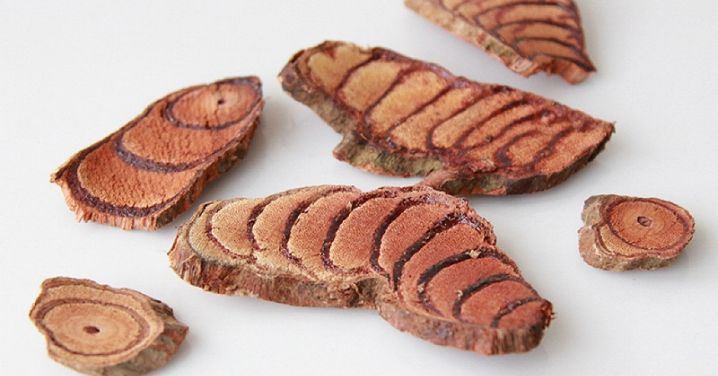
There are some plants that scream for attention. They stand tall, colourful, dramatic, and almost smug about their beauty. And then there are others, the quiet ones. The Spantholobus stem falls firmly into the latter camp. You could walk right past it on a forest trail, brush against its vine-like structure, and never give it a second thought. No dazzling bloom, no overwhelming scent, no giant presence demanding awe. Just a modest stem from an unassuming plant in the pea family. And yet, the Spantholobus stem has been woven into centuries of traditional healing, a reminder that sometimes, the most ordinary things carry the most extraordinary stories.
The thing about plants like this is that they ask nothing from us. They don’t lure us with flamboyant petals or intoxicate us with perfume. They simply exist, stretching quietly through the forests of Southeast Asia, content to remain in the background. And yet, generations of people have sought them out, stripped their stems, brewed their essence into teas, and trusted them to soothe fevers, ease aches, and bring relief where little else was available. That’s the quiet power of the Spantholobus stem: it doesn’t need to dazzle to matter.

I find that comforting. In a world where value is so often tied to visibility, it feels almost rebellious that a humble vine could carry such importance. It’s the plant equivalent of the friend who never posts on social media, never makes a fuss, but is the one you call when life crumbles. Reliable. Steady. Unshowy. That’s Spantholobus. Not the hero in the spotlight, but the dependable supporting role without which the story doesn’t work.
Of course, if we’re honest, most of us would overlook it. I’ll admit, if you asked me to choose between staring at a Spantholobus stem or a Titan Arum in bloom, my nose (and my camera) would point straight at the flashy giant. And yet, when it comes to practical value, the Spantholobus might actually be the one worth paying closer attention to. For centuries, communities have trusted it as a source of healing. Its stem is chopped, boiled, transformed into herbal infusions that have treated everything from rheumatism to persistent fevers. While Western medicine is quick to dismiss plants like these as “folk remedies,” the fact that they’ve endured for generations suggests they carry more than just placebo.
There’s a lesson here, and it’s one I keep circling back to: how often do we dismiss something—or someone—just because they don’t fit our idea of what is impressive? We live in a culture that chases spectacle. Viral videos, dramatic headlines, bold personalities. But the truth is that most of life is held together not by fireworks but by quiet, reliable threads. A Spantholobus stem is not glamorous. It doesn’t shout. It doesn’t perform. But it endures. And in enduring, it offers something more profound than glamour: usefulness.
Let’s linger on that idea of usefulness for a moment. I don’t mean utility in the cold, mechanical sense. I mean the kind of usefulness that comes from being woven into the fabric of human life. A plant becomes useful when it feeds us, heals us, shelters us, or even teaches us something about ourselves. Spantholobus earns its place not in flower shows but in kitchens and apothecaries, in whispered knowledge passed down through families. “Boil this stem,” a grandmother might say, “and drink it when your joints ache.” That’s legacy. That’s trust. And it doesn’t require a standing ovation to matter.

There is also something profoundly democratic about plants like this. They’re not rare orchids guarded in glasshouses. They’re accessible, available to the communities who need them most. In that sense, they are equalising. They don’t care if you’re rich or poor, educated or not. They grow anyway, and they offer their healing anyway. I find that quietly radical. In a world where access to healthcare is often dictated by privilege, a plant like Spantholobus is a reminder that nature doesn’t discriminate in the same way we do.
Now, I could get all clinical here and rattle off chemical compounds, alkaloids, and flavonoids. But that feels like missing the point. Yes, researchers are still exploring what gives the Spantholobus stem its medicinal potential. But what interests me more is the human relationship to it—the trust, the rituals, the act of turning to nature for comfort. For me, that is where the real story lies. Science can catch up later; in the meantime, people have already written their own truth in the way they use it.
There’s also a humility here that resonates deeply. Plants like this don’t need to prove themselves through grandeur. They are content to serve quietly, without recognition. And perhaps that’s the part that unsettles me most, because it makes me reflect on how much of my own life has been spent trying to be seen, to be recognised, to be validated. How often do we forget that value doesn’t always come with applause? The Spantholobus stem doesn’t trend on Instagram. It doesn’t make headlines. But it has been healing bodies for centuries. There’s a weight in that, one that no spotlight can replicate.
And yes, I’ll admit, there’s something cheeky about celebrating a plant whose name most people have never heard of. Spantholobus doesn’t exactly roll off the tongue. It’s not destined for Valentine’s bouquets or tattoo designs. It’s a little awkward, a little obscure. But maybe that’s why it’s worth talking about. Because if even something this unglamorous has shaped lives, then maybe the same is true for the overlooked parts of our own existence. The conversations we forget we had, the people we pass by, the moments that don’t feel remarkable at the time but accumulate into meaning later.
I suppose what I’m really saying is that the Spantholobus stem is not just a plant. It’s a mirror. It reflects back to us the truth that value doesn’t need to be loud. That there is strength in modesty. That sometimes, the things we brush past without noticing are the very things holding us up. And in a world spinning faster by the day, it feels grounding to remember that.
Here’s the thing though: the Spantholobus stem also has fragility. Its presence depends on ecosystems that are shrinking, on forests that face the same pressures as those in Sumatra or the Amazon. And so the story of this plant is also a story of our responsibility. If we don’t care for the spaces where plants like this grow, then their quiet service will fade. We risk losing not just a medicinal stem but the cultural memory tied to it, the threads of knowledge passed down through generations. Protecting plants like this is not just about preserving biodiversity. It’s about preserving wisdom.
So the next time you hear about some strange plant name in passing, maybe resist the urge to shrug it off. Behind that unremarkable word might be centuries of human reliance, healing, and meaning. Behind it might be a story of patience, resilience, and quiet endurance. Behind it might be Spantholobus, stretching quietly through the undergrowth, waiting for someone to notice what it has always offered.
And maybe that’s the bigger takeaway for all of us. Not everything important will demand your attention. Some things will whisper instead of shout. Some things will hide in the background, waiting for you to pause long enough to see them. The Spantholobus stem is a reminder that life is stitched together not only by its fireworks but also by its threads. Ignore those threads, and the fabric comes apart. Notice them, and you realise the quiet is just as vital as the spectacle.
In the end, Spantholobus will never be a showstopper. But maybe that’s the point. Not all value is meant to dazzle. Sometimes, it’s meant to support, to heal, to remain steady in the shadows. And perhaps that’s the lesson worth holding onto: that even in the overlooked, there is power. Even in the quiet, there is meaning. And even in the humblest stem, there is a story worth telling.