
There is something genuinely exciting about seeing a familiar South African face step into one of the country’s biggest television worlds. Not just because it makes for a great entertainment headline, although yes, that too. But because moments like this remind us that local storytelling is still growing, still shifting, and still making space for more voices, more cultures, and more characters that feel like they belong to the South Africa we actually live in.
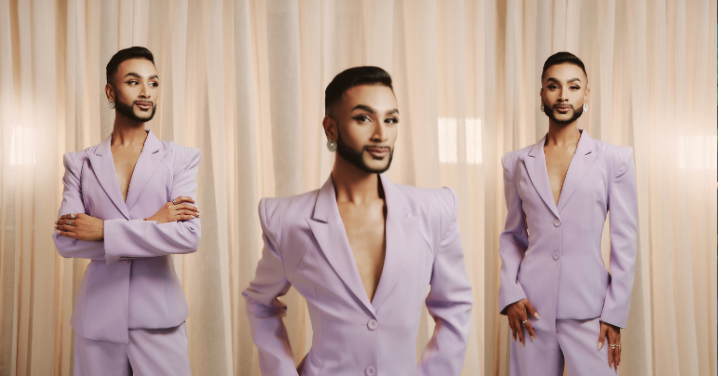
South African media personality Diolan Govender is set to make an exciting on-screen appearance on Uzalo on SABC 1, a show that has held a powerful place in local television for years. For many viewers, Uzalo is not just another soapie. It is part of the evening routine. It is that familiar screen presence in homes across the country, the kind of show people discuss while making dinner, scrolling on their phones, or pretending they are not emotionally invested while very clearly being emotionally invested.
Now, Diolan steps into that world in a role that feels fresh, culturally layered, and perfectly timed for a South African television landscape that continues to ask an important question: who gets to be seen?
Diolan will appear as Lee, a Durban-based sous chef specialising in Chinese cuisine, in a special episode set to air on 01 May 2025 at 20:30. It may sound like a small character description at first glance, but it carries more weight than people might realise. A Durban-based chef. Chinese cuisine. A new face entering the Uzalo universe. These details matter because representation is not only about the big dramatic speeches or the headline-grabbing roles. Sometimes, it lives in the everyday details. It lives in a character having a name, a profession, a background, and a reason to exist beyond simply filling space.
And honestly, that is where television becomes powerful.
South Africa is one of the most culturally layered countries in the world. We are a country of many languages, histories, identities, communities, and lived experiences. Yet, for a long time, mainstream entertainment has not always reflected that richness in its full complexity. We have seen progress, absolutely, but there is still something meaningful about every new character who adds another thread to the bigger story of who we are as a country.
That is why Diolan’s appearance on Uzalo feels like more than just a career moment. It is also a small but significant reminder that South African screens are at their best when they reflect South African people in all their variety.
“Being part of Uzalo is a dream come true,” says Govender. “It’s a show that has such a strong cultural footprint in South Africa, and to step into that world, even briefly, is incredibly meaningful for me.”
That quote says a lot. There is the excitement of being part of a major show, of course, but there is also a sense of respect for the platform itself. Uzalo has become one of those shows that carries cultural weight. It is familiar, widely watched, and deeply connected to local audiences. Joining a show like that is not simply about getting screen time. It is about stepping into a space that millions of people already feel connected to.
For Diolan, this role marks another milestone in a career that has been steadily expanding across entertainment, social media, and traditional broadcast platforms. Best known for his role on YOtv, Netflix’s Miseducation and his growing digital presence, he has built a reputation as an engaging and authentic voice within South Africa’s digital landscape.
That word, authentic, gets thrown around a lot these days. Everyone wants to be authentic, usually while filming themselves pretending not to know they are being filmed. But in Diolan’s case, it fits because his rise has happened in the way many modern South African creatives are building their careers now. Not through one neat, predictable path, but through a mix of platforms, audiences, formats, and opportunities.
One day it is digital content. Another day it is television. Then streaming. Then commentary. Then entertainment. The modern media personality is no longer limited to one lane, and thank goodness for that, because some of us can barely commit to one coffee order, never mind one career format.
Diolan’s content spans lifestyle, commentary, and entertainment, and it has resonated with a young, connected audience. That is important because South Africa’s influencer economy is not just about people posting pretty pictures and hoping the algorithm behaves itself for once. It is about visibility, voice, relatability, and cultural influence. Digital creators are increasingly becoming part of the broader entertainment pipeline, and television is starting to recognise that.
This is where Diolan’s appearance on Uzalo becomes especially interesting. It shows the ongoing crossover between digital culture and traditional media. A creator can build a community online, develop a distinct voice, connect with audiences directly, and then step into a major television production. That kind of movement says something about where the industry is heading. The walls between “online personality” and “television talent” are becoming thinner, and in many cases, that is a good thing.
Audiences today do not only want polished performers. They want people who feel real. They want faces they recognise, voices they trust, and personalities that feel connected to the way people actually communicate. Diolan brings that kind of energy with him.
“For me, it’s about growth,” he adds. “Opportunities like this show what’s possible when you stay consistent and true to your voice.”
That line feels like the heart of the story.
Growth is not always loud. Sometimes it looks like showing up consistently, creating even when the engagement is weird, learning as you go, taking the smaller opportunities seriously, and then suddenly finding yourself on one of the biggest shows in the country. It is easy to look at a milestone and treat it like it arrived out of nowhere, but most creative careers are built in the less glamorous middle part. The part where nobody is clapping yet. The part where you are still trying, still refining, still wondering whether the effort is going somewhere.
Then a moment like this happens, and it becomes proof that consistency still counts.
But beyond Diolan’s personal growth, there is a bigger conversation here about cultural diversity on screen. Characters like Lee help expand the world of a show. They make it feel more lived in. More layered. More reflective of the country outside the studio walls.
Durban itself is a culturally rich setting with a deep and complex history, including a significant Indian community, a strong food culture, and many overlapping cultural influences. Introducing a Durban-based sous chef specialising in Chinese cuisine adds another interesting layer to that environment. It suggests a South Africa where cultures do not sit in separate boxes, neatly labelled for convenience. They interact. They influence each other. They show up in food, language, work, friendships, neighbourhoods, and family stories.
Food, especially, is one of the most natural ways to explore culture on screen. A character who works as a chef is not just doing a job. They are often connected to heritage, creativity, discipline, hospitality, ambition, and identity. A kitchen can become a place where culture is expressed without needing a lecture. The ingredients, the techniques, the pressure, the pride, and even the mistakes can say a great deal.
And let us be honest, chefs on screen always bring a certain level of drama. Someone is either about to fall in love, lose their temper, discover a family secret, or serve a dish so emotionally loaded it deserves its own credit in the cast list.
That is the beauty of introducing new characters into established shows. They bring possibility. A new character can shift the mood of a scene, introduce a new cultural reference point, or remind viewers that the fictional world they are watching is meant to feel as textured as the real one.
‘’Uzalo has always been intentional about creating a world that feels familiar, exciting and reflective of the many voices that make up South Africa. Bringing Diolan Govender into this special episode adds a fresh layer to that vision. His presence is a celebration of new-generation talent, and we are pleased to welcome him to a show that has remained a dominant force on local screens for years.’’ – Nomfundo Zondi, Head of Communications at Stained Glass TV
That statement captures exactly why this matters. The word “intentional” stands out because representation does not happen by accident. It requires choices. Casting choices. Writing choices. Production choices. The decision to create a world that feels familiar and reflective means paying attention to who is included, how they are included, and whether audiences can see something of themselves in the story.
There is also something refreshing about seeing new-generation talent being welcomed into long-standing television spaces. South African entertainment needs that blend. It needs established platforms with loyal audiences, and it needs fresh voices who understand the rhythm of modern culture. When those two things meet, there is potential for something genuinely exciting.
For Diolan Govender, this role is another step in a career that seems to be moving with purpose. From youth television to streaming platforms to digital influence and now a special appearance on Uzalo, his journey reflects the modern South African creative path. It is multi-platform, adaptable, and built on presence.
For Uzalo, it is another chance to expand its world and continue showing that local television can evolve without losing the heart that made people tune in to begin with.
And for viewers, it is a reminder that representation on screen does not always arrive with a flashing sign saying, “Important cultural moment happening here.” Sometimes it arrives as a new character. A sous chef. A Durban setting. A line of dialogue. A familiar face doing something new.
Those moments matter because people notice. Young creatives notice. Viewers from different communities notice. Anyone who has ever wondered whether there is room for them in South African entertainment notices.
That is the power of seeing more of ourselves on screen. Not as a token. Not as a box being ticked. Not as a side note. But as part of the story.
Diolan Govender’s appearance on Uzalo may be a special episode, but the meaning behind it speaks to something much bigger. It speaks to growth, representation, cultural visibility, and the exciting future of South African entertainment.
Because when our screens begin to look more like our country, the stories become richer. The characters become more human. And the audience gets to feel that little spark of recognition that says, yes, there is space here for us too.
And honestly, that is the kind of screen time worth celebrating.