

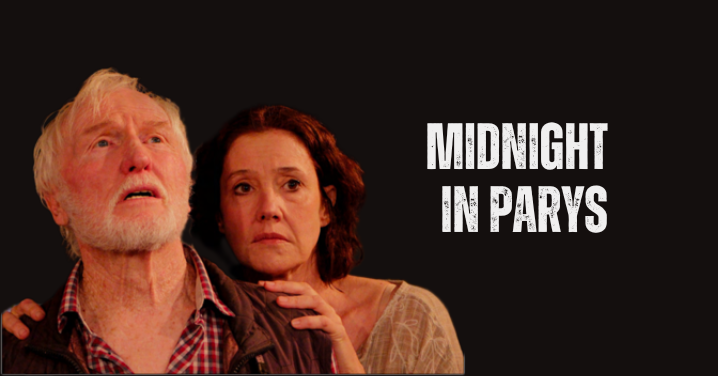
Some theatre entertains you for an evening. Some theatre gives you something to talk about on the drive home. Then there is the rare kind of theatre that settles somewhere far deeper, somewhere quieter, and refuses to leave.
MIDNIGHT IN PARYS, the powerful new work by Paul Slabolepszy, appears to be exactly that kind of production.
Following an exceptional response from audiences and critics, the show has officially been extended until 2 August at Pieter Toerien’s Theatre at Montecasino. For theatre lovers, this is the kind of news that should not be ignored. When a production earns this level of praise, and then gets more time on stage because people are clearly responding to it, it usually means there is something rather special happening in the room.
And by all accounts, MIDNIGHT IN PARYS is not simply special. It is deeply affecting.
Written and performed by Paul Slabolepszy, alongside Bianca Amato, and directed by Bobby Heaney, the production has been described as haunting, moving, magnificent and even one of the most impactful theatre experiences witnessed in decades. That is not the sort of praise one throws around lightly, unless one has either been truly moved or has run out of sensible adjectives and decided to go all in.
In this case, it seems to be the former.
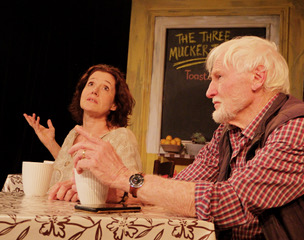
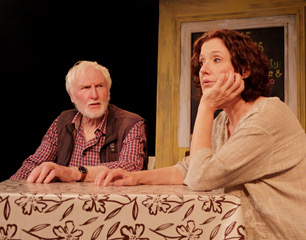
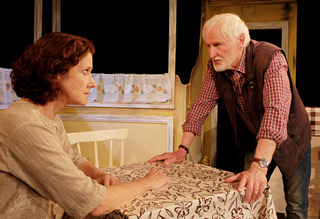
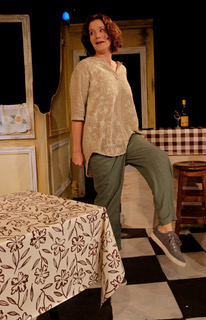
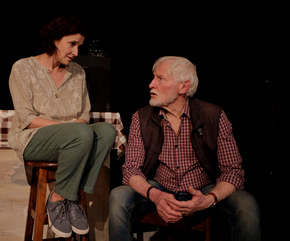
At its heart, MIDNIGHT IN PARYS is a story about love, loss, loneliness, connection and the devastating weight of the promises people make. It is about the roads we travel, the baggage we carry and the quiet moments that can alter the course of a life. More than anything, it appears to be a story about human beings standing at the edge of something enormous, forced to confront the truth of what they have done, what they have lost and what they still hope might be possible.
Robyn Sassen describes the work as being about “love and loss and big promises which are devastating and seismic to keep”. She writes that the story speaks to anyone who has loved with the kind of honesty that leaves them open to complete destruction. Her response is clear: bring tissues. She calls it a haunting tale, unique, horrifying and deeply moving, placing Slabolepszy alongside Athol Fugard in terms of his theatre-writing voice.
That comparison alone is enough to make South African theatre audiences sit up a little straighter.
Bruce Dennill notes that when the lights go down, the audience is left grappling with the same brutally life-altering decisions as the characters. He describes MIDNIGHT IN PARYS as compact and compelling, entertaining and engaging, and says the work does not allow anyone to “go gently into a good night”. In other words, this is not passive theatre. It asks something of you. It pulls you into the emotional and moral tension of the story, and then leaves you to sit with it.
Kirsty Galliard highlights the play’s deep humanity, describing how a moment of empathy and the curiosity to ask one more question become the catalyst for a powerful connection. She calls it a production that leaves audiences quietly shocked and deeply moved long after the curtain falls. Her praise extends to the writing, direction and performances, calling MIDNIGHT IN PARYS beautifully written, masterfully directed and elevated by exquisitely nuanced performances from Slabolepszy and Amato.
That word, nuanced, seems important here.
Because a story like this cannot survive on spectacle alone. It needs restraint. It needs truth. It needs actors who understand that sometimes the smallest silence can carry more weight than the loudest speech. From the critical response, it sounds as though Slabolepszy and Amato deliver exactly that. Two performers, a difficult story and the kind of emotional honesty that can make an audience forget they are watching a performance at all.
Chris Reinders describes the production as one of the most impactful theatre experiences he has witnessed in decades, praising the passion and skilled craft of both Paul Slabolepszy and Bianca Amato. He also calls Bobby Heaney’s direction superbly sensitive and nuanced. This matters, because direction in a play like this is not simply about moving bodies across a stage. It is about knowing when to hold back, when to let silence breathe and when to allow the emotional weight of a moment to land without interference.
David Batzofin calls the production magnificent and refers to it as theatre magic. He also points out something essential about the title. MIDNIGHT IN PARYS may sound like it belongs to a place, but this is not really a story about geography. It is a story about people. About loneliness and connection. About the paths we take and the baggage we drag behind us, sometimes willingly, sometimes without even realising it.
Most importantly, he speaks about redemption arriving when we least expect it.
That may be the thing that makes this production resonate so strongly. Because at some point, everyone understands the need for redemption. It may not always arrive in grand, cinematic fashion. There is not always swelling music and perfect lighting. Sometimes it arrives in a conversation. In a question. In a moment of unexpected kindness. In the fragile possibility that someone might still see us clearly and not look away.
Stan Katz describes MIDNIGHT IN PARYS as absolute genius, praising the play, direction and acting as superb. He says he was deeply moved and calls it a brilliant piece of work.
When multiple critics respond with this level of emotion and admiration, it becomes clear that MIDNIGHT IN PARYS is not just another production on the theatre calendar. It is an experience. The kind of theatre that asks audiences to feel rather than merely observe. The kind that takes its time with pain, memory and consequence. The kind that understands that human connection can be both terrifying and saving.
There is something particularly powerful about South African theatre when it is at its best. It has a way of stripping things down to their emotional core. No unnecessary fuss. No hiding behind scale for the sake of scale. Just people, words, choices and consequences. MIDNIGHT IN PARYS seems to sit firmly in that tradition, while still offering something distinct, intimate and urgently human.
And now, with the show extended until 2 August, audiences have more time to experience it at Pieter Toerien’s Theatre at Montecasino.
That extension is not just a scheduling update. It is a sign. It tells us that the work is landing. That people are talking. That the emotional current running through this production is strong enough to keep pulling audiences in.
For anyone who loves theatre that leaves a mark, MIDNIGHT IN PARYS sounds like essential viewing. For anyone who has ever loved deeply, lost painfully, carried regret, longed for connection or wondered whether redemption can still find its way through the cracks, this may be one of those productions that speaks directly to the tender parts we usually keep well guarded.
So yes, bring tissues.
But also bring your full attention. Bring the person who loves theatre. Bring the friend who says they want to see something meaningful. Bring the part of yourself that still believes a story can shift something inside you.
MIDNIGHT IN PARYS has been extended until 2 August at Pieter Toerien’s Theatre at Montecasino.
Do yourself a favour. Don’t miss it.