

This could be one of the most bizarre weirdest things you will ever learn in your life. Or you might even know this already, however, it’s still quite an interesting story of what the chainsaw was invented for.
When someone says the word chainsaw, you would most likely not think about cute little babies’ but instead think about a masculine man wielding a massive chainsaw cutting a thick piece of wood into tiny pieces, or perhaps a bit more gruesome imagery like The Texas Chainsaw Massacre movie franchise.
Reality though is far different from what the chainsaw was actually invented for.
In the realm of modern inventions, few tools boast as fascinating and unexpected a genesis as the chainsaw. Today synonymous with timber felling and sculpting, this powerful device traces its roots back to a purpose far removed from forestry: childbirth.
The tale begins in the late 18th century, a period marked by remarkable medical explorations and inventions. Amidst this era of discovery, two pioneering Scottish doctors, John Aitken and James Jeffray, perceived the need for a more efficient method to assist in difficult childbirths. Their solution was both ingenious and, to the modern sensibility, somewhat startling.

Traditionally, in cases where a baby could not be delivered naturally or with the aid of forceps, a craniotomy had to be performed. This procedure, as grim as it sounds, involved the surgical removal of fetal bone to facilitate delivery, often with tools that were rudimentary and imprecise. The morbidity associated with such interventions was high, prompting the search for a more refined approach.
Enter the prototype of the modern chainsaw. Initially, this device was far smaller and more rudimentary than its contemporary descendants, designed with a hand-cranked mechanism that moved a chain with serrated teeth around a guiding blade. Its purpose was to expedite the procedure by making precise cuts with minimal harm to the mother, a revolutionary concept at the time.
The innovation represented a significant leap forward in surgical technology. It allowed for a quicker, cleaner, and more controlled operation, reducing both the time the procedure took and the associated risks. This early chainsaw, despite its medical utility, would be almost unrecognisable to us today. It was a delicate instrument, used with the utmost care by skilled practitioners.
As medical science advanced and cesarean sections became safer and more common, the need for such invasive procedures diminished. The chainsaw’s role in childbirth became a historical footnote, but its journey was far from over.
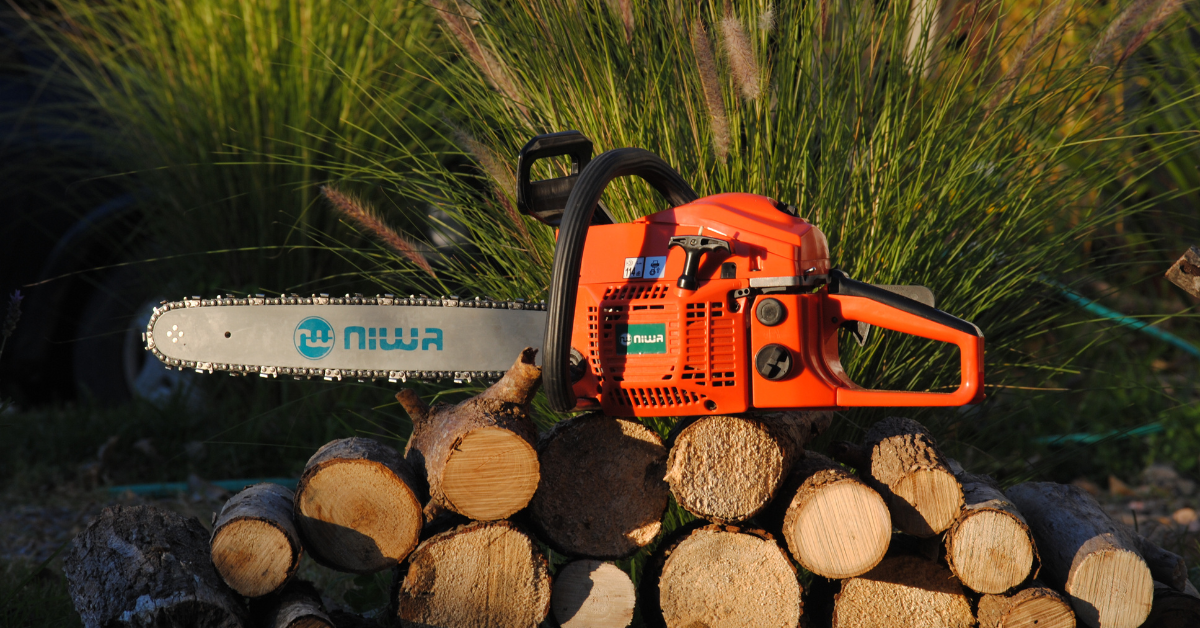
The versatility and effectiveness of the chainsaw’s cutting mechanism did not go unnoticed in other fields. It wasn’t long before the tool was adapted and upscaled for use in timber cutting. With enhancements in power sources, from manual cranking to electricity and gasoline, the chainsaw evolved into the robust, efficient tool we are familiar with today.

This transition from medical instrument to forestry tool is a testament to human ingenuity and adaptability. What began as a device to save lives in the birthing room found a second life in the great outdoors, transforming from a surgical implement to an indispensable part of the lumber industry.
The story of the chainsaw is a compelling illustration of how innovations can traverse sectors, adapted and refined over time to meet the changing needs of society. It challenges us to look beyond the obvious applications of technology and appreciate the winding paths of invention. From the operating theatre to the heart of the forest, the chainsaw’s journey is a vivid reminder of the interconnectedness of human endeavour.

Today Stihl still is one of the largest manufacturers of powered chain saws. STIHL
In the grand narrative of technological progress, the chainsaw occupies a unique chapter. It serves as a powerful reminder of the origins of innovation, often born out of necessity and shaped by the challenges of the times. As we wield these tools today, it’s worth pausing to reflect on their humble beginnings, a time when a device now associated with rugged outdoor work was once a delicate lifeline in the most critical moments of human life.
Wow, there you have it, folks. The invention of the chainsaw.