Around the World in 12 Weird Festivals (That Aren’t Just for Tourists)
 0
0
 0
0
 0
0
0
0
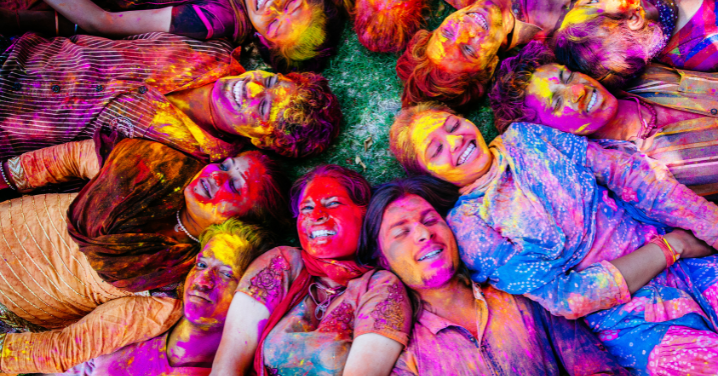
There’s a strange comfort in knowing that somewhere out there, at this very moment, a group of people is probably throwing cabbages at one another in the name of tradition. And no, that’s not a weird metaphor. It’s just the way the world rolls sometimes—brilliantly, gloriously, unapologetically bizarre. While most of us are familiar with big-name cultural events—your Rio Carnival, your Oktoberfest, your Holi Festival—you’d be surprised how many corners of the world are home to festivities so wonderfully odd, they make our local cheese festival look tame.
Now I’m not here to judge—if anything, I’m genuinely impressed. It takes a special kind of commitment to organise an annual event dedicated solely to chasing cheese wheels down a hill, or launching tomatoes at your neighbours like it’s a Mediterranean food fight. But here’s the thing: these festivals, strange as they sound, have this uncanny way of bringing people together. Whether it’s through ritual, food, absurd competitions, or just a shared moment of collective what-the-actual-heck-is-going-on, they tap into something deeply human. That craving for connection, for celebration, for stories worth retelling over drinks.
Let’s start with one that actually involves drinks—lots of drinks. Every year in Ivrea, Italy, they hold the Battle of the Oranges. It’s not a polite citrus-themed picnic, mind you. It’s a full-blown street brawl with oranges as your only weapon. Apparently, it reenacts a 12th-century revolt, but let’s be honest—someone, somewhere just wanted an excuse to pelt fruit at strangers without consequence. Participants split into teams and hurl oranges at one another from horse-drawn carts or behind strategically placed nets. It’s brutal, it’s messy, and the clean-up crew deserves a medal.
Then there’s the Naki Sumo Crying Baby Festival in Japan. No, seriously. This one involves sumo wrestlers holding babies up in the air while priests try to make them cry—because in Japanese culture, a loud cry is believed to bring good health and scare off evil spirits. The louder the baby, the better. The wrestlers, for their part, look simultaneously proud and confused, while the babies are doing what babies do best: scream their tiny lungs out. Imagine entering your child in a competition where the goal is maximum tears. “Yes, that’s my boy! Proper sobbing, he is. That’s a medal cry.”
Of course, not all unusual festivals involve crying or projectile fruit. Over in the Philippines, they’ve got the Pahiyas Festival, where entire houses are decorated in colourful displays made of rice, fruits, and woven crafts. It’s part religious offering, part art installation, and part suburban pride competition—like Christmas lights on steroids, with vegetables. And I mean, who wouldn’t want to walk down a street lined with intricately designed, edible murals? It makes our neighbourhood garden gnome situation look frankly underwhelming.
And let’s not forget the Wife Carrying Championship in Finland. This one’s gained a bit of international fame, but it still firmly belongs in the “who came up with this?” category. The premise is simple: carry your partner through an obstacle course as fast as you can. The prize? Your wife’s weight in beer. I’m not even making that up. It’s wholesome, ridiculous, and somehow romantic—nothing says “I love you” like hoisting your better half over your shoulder and legging it through a mud pit.
In Spain, they’ve got a real flair for dramatic festivities, and El Colacho might just take the cake. Also known as the Baby Jumping Festival (I promise I’m not making these up), it involves grown men in devil costumes literally leaping over rows of infants. Supposedly, it’s meant to cleanse the babies of sin and bring protection. The babies, of course, have no idea what’s going on—they’re just lying there while their parents stand nearby, trusting that Señor Devil has decent aim and strong quads. One rogue ankle wobble and suddenly your precious bundle’s part of a very different headline.
Meanwhile, in Scotland, they’ve got the Up Helly Aa fire festival, which sounds like something invented by a bunch of Vikings who found matches and got excited. It’s a winter celebration in Shetland involving torch-lit processions, traditional songs, and the burning of a Viking longship. It’s majestic and slightly terrifying, especially if you’ve had a dram too many and suddenly there’s a flaming boat heading your way.
And what about the World Toe Wrestling Championships in England? Yes. Toe. Wrestling. Picture thumb wars, but with feet, and you’ve got the general idea. There are rules, referees, and apparently, serious rivalries. It’s the kind of event that leaves you with more questions than answers. Who trains for this? What does the pre-game pep talk sound like? “Alright lad, flex those big toes. Today, we make history.”
I’d be remiss not to mention La Pourcailhade in France—better known as the Pig-Squealing Championships. Contestants compete to mimic the sounds of pigs in various stages of farm life: feeding time, happy pig, angry pig, and so on. Judges score them on authenticity and performance. It’s a bizarre mix of theatre and animal impersonation, and somehow manages to be both hilarious and slightly unsettling. That’s dedication. I’ve heard karaoke versions of ‘Bohemian Rhapsody’ that were less accurate.
Then you’ve got Goose Pulling—a now mostly symbolic tradition once common in parts of Europe. The original version (thankfully no longer practised in the same way) involved horsemen trying to yank the head off a suspended goose. These days, it’s all about pageantry, costumed riders, and thankfully no live geese. We’ve come a long way, although if you squint, it still looks like an event someone made up after a few too many drinks at the village pub.
Even in our own back garden here in South Africa, there’s room for the wonderfully odd. Think of the Namaqualand Flower Festival, which is less about tradition and more about escapism—a weekend where Capetonians and Joburgers alike pretend they’re bohemian wanderers amid a riot of wildflowers and dust. Technically not as unusual as pig squealing or toe wrestling, but any event that requires you to pack glitter, gumboots, and a floral headpiece qualifies in my book.
So, why do these festivals exist? Why are we so drawn to the weird and the whimsical? Maybe it’s because, deep down, we crave novelty. Something that jolts us out of routine, gives us permission to be silly, and lets us connect over something completely ridiculous. We might not all agree on politics or pineapple on pizza, but we can all laugh at the image of grown adults in banana costumes racing tricycles through a village.
There’s also something refreshingly honest about these festivals. They’re not trying to be sophisticated or marketable. No one’s Instagramming their way through the Cheese Rolling Championship looking elegant. These events are messy, imperfect, and often deeply rooted in local tradition—passed down through generations with just the right mix of reverence and “what were they thinking?”
It’s also worth noting how these oddball gatherings can attract tourists, boost local economies, and keep cultural heritage alive—even if that heritage involves aggressively seasonal produce. People flock from around the globe to take part, document, and, of course, gawk. And can you blame them? Who wouldn’t want to say they survived the Tomato War of Buñol or carried their partner through a knee-deep swamp?
Of course, not all festivals are light-hearted. Some are deeply spiritual, sacred, or sombre. But even those that started from solemn roots often evolve to include a bit of spectacle—because spectacle brings people. And people, with their curious brains and restless spirits, love a good story. Especially one that ends with, “…and then we covered ourselves in paint, danced with flaming torches, and declared Barry from accounting the Champion of the Great Sardine Toss.”
Maybe it’s the absurdity that appeals to us the most. Life is serious enough. The world feels heavy more often than not. But these festivals? They remind us that joy can be found in the most unlikely places—in oranges to the face, in crying infants held aloft, in toes locked in battle. They give us permission to laugh, to play, to be wonderfully weird.
So, here’s to the oddballs, the cabbage throwers, the barefoot cheese chasers. Here’s to the towns that decided tradition didn’t need to make sense, only to make memories. And here’s to you, dear reader—who might, after reading this, start planning your next holiday not around beaches or landmarks, but around the chance to dress up like a fish and dance around a fountain because it’s what they’ve done for centuries.
Who knows? Maybe your own backyard could use a bit of chaos. Start small—host a neighbourhood jelly-flinging contest. Invent a backstory. Call it cultural. Watch it grow. Stranger things have happened.