From China to South Africa: The Deadliest Hikes You Can Actually Do
 0
0
 0
0
 0
0
0
0
There’s something about putting on a pair of hiking boots, strapping on a backpack, and staring up at a mountain that says, “Yes, this could absolutely kill me—but I’m doing it anyway.” Around the world, adventurers have swapped comfort for adrenaline, choosing trails that are less scenic stroll and more real-life boss level. These aren’t your weekend dog-walking paths. These are the world’s most dangerous hiking trails—where the rewards are epic and the risks are, well, a little bit terrifying.
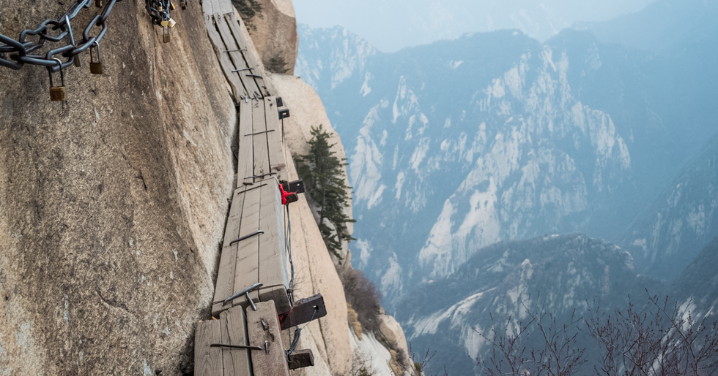
Let’s start with Mount Huashan in China. It’s famous for its “Plank Walk,” where hikers cling to wooden boards bolted into a cliff face thousands of metres above the ground. There are chains to hold onto (thankfully), but the planks are narrow, the drop is vertical, and the panic is very real. Despite this, it’s become a bucket-list challenge for those seeking a mix of danger and Instagram likes. Just don’t look down.
Over in the United States, there’s the Kalalau Trail in Hawaii. Sounds idyllic, right? Picture lush jungle, ocean views, and waterfalls—now add muddy slopes, flash floods, and narrow ledges with sheer drops. It’s not uncommon for parts of the trail to become impassable without warning. Still, hikers keep coming, drawn by the remote beauty of the Nā Pali Coast and the thrill of surviving it.
In Spain, you’ll find El Caminito del Rey, once dubbed the world’s most dangerous walkway. Originally built for workers to access hydroelectric plants, the narrow path clings to the walls of a gorge and was left to deteriorate for decades. With missing handrails and crumbling concrete, it was a daredevil’s dream until renovations made it safer—but not entirely tame. It still offers the same dizzying exposure, with fewer accidental plunges.
Then there’s Drakensberg’s Chain Ladders route in South Africa. It might not make every global danger list, but for locals and savvy hikers, it’s legendary. You climb two sets of steel ladders bolted to a rock face to reach the Amphitheatre summit. It’s perfectly safe if you’re confident and cautious—but if you’re afraid of heights or heavy winds, expect a full-body adrenaline response. The views from the top are worth every shaky rung.
If you’re a fan of alpine drama, head to Italy’s Sentiero Azzurro or the more intense Via delle Bocchette in the Dolomites. These routes mix vertical climbs, exposed paths, and fixed cables. They’re part hike, part climb, and entirely stunning. It’s all about earning the view with a little sweat, fear, and a strong grip on your via ferrata kit.
Don’t forget Bolivia’s El Chorro Trail. It starts in the snow-capped Andes and plunges down into the Amazon basin—over 70 kilometres of changing terrain, dizzying descents, and shifting weather. It’s less about death-defying drops and more about stamina, resilience, and the ability to keep going when your legs have stopped listening.
Of course, some trails are dangerous because of wildlife, remoteness, or altitude sickness. Mount Everest’s base camp trek isn’t technically difficult, but the risk of altitude-related illness makes it more perilous than it seems. The same goes for the Snowman Trek in Bhutan—long, high, and unpredictable.
Even in Australia, where everything already wants to kill you, the Larapinta Trail combines brutal heat, limited water, and remote conditions. Hikers need to be self-sufficient, mentally tough, and extremely well prepared. Not deadly in the dramatic cliff-fall sense, but absolutely punishing if underestimated.
So why do people do it? Why voluntarily hike trails where a wrong step could mean serious injury or worse? Maybe it’s the views. Maybe it’s the bragging rights. Maybe it’s something deeper—about facing your fears, testing your limits, and walking the line between caution and courage.
One thing’s for sure: these trails demand respect. They’re not for casual wanderers or flip-flop tourists. But for those willing to take the risk, they offer unmatched beauty, raw connection to the earth, and the kind of stories you can’t get from a luxury resort.