
Is Wakkerstroom the Best Small Town in South Africa?
 0
0
 0
0
 0
0
0
0
Wakkerstroom isn’t the type of place that tries to impress you with bells and whistles. It doesn’t need to. Sitting quietly in the high-altitude grasslands of Mpumalanga, close to the KwaZulu-Natal border, Wakkerstroom feels like a gentle exhale. It’s the kind of town that quietly waits for you to show up, and when you do, it hands you a pair of binoculars, a slice of homemade cake, and a silence so good it almost feels like music.
The name means “awake stream,” which already feels poetic—and surprisingly accurate. There’s something very awake about this place. Maybe it’s the crispness in the air, or the wide-open spaces, or the way the light hits the grass just right in the late afternoon. Founded in the mid-1800s, Wakkerstroom began life as a Voortrekker outpost, but these days, it’s made a name for itself in very different circles. Namely: birdwatchers, nature lovers, artists, and city folk in desperate need of a reboot.
Birders—yes, that’s a real word—speak about Wakkerstroom in almost reverent tones. With over 300 species recorded in the area, it’s one of the top birding spots in the country. And we’re not talking about the odd dove on a power line. We’re talking blue cranes, bald ibises, and rare larks that twitchers travel hundreds of kilometres to tick off their lists. Even if you’ve never looked at a bird through binoculars in your life, there’s something magical about seeing one of these elusive beauties flap past in that enormous sky, just doing its thing.
But even if birding isn’t your thing, Wakkerstroom still holds plenty. The wetland at the edge of town is a rambling, waterlogged haven for frogs, reeds, and reflections. There are walking trails and mountain bike routes that wind through hills, past farm gates and windmills, giving you those classic South African views you forgot still existed. You don’t need to be sporty to enjoy it either. A simple walk through the veld with nothing but the sound of your own feet can feel like therapy.
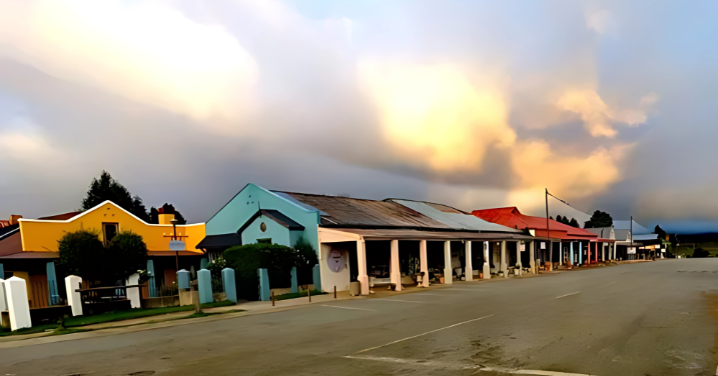
The town itself is charming in that “accidentally perfect” way. A mix of old cottages with tin roofs, art galleries tucked into side streets, coffee shops that double as second-hand bookstores, and local pubs where the fire is always going. You’ll find antiques, woodwork, a couple of roosters strutting like they own the road, and menus full of things like venison pie, home-baked scones, and locally brewed beer. People talk to each other. The pace is gentle. No one’s in a rush, and no one expects you to be either.
There’s also a creative hum in the air. Artists, writers, and musicians have quietly migrated to Wakkerstroom over the years—drawn by the stillness, the beauty, and the slightly off-the-grid vibe. You’ll see their work on walls, in workshops, and at markets where creativity and community mix over cups of rooibos and slices of lemon cake. It’s the kind of place where inspiration seems to come easier—maybe it’s the altitude.
Wakkerstroom isn’t polished, and that’s part of the charm. The roads are bumpy in places. The shops don’t all open on time. The dogs might bark at you, but only because they’re excited you’re new. It’s all part of the rhythm. This is a place that doesn’t do gloss—it does real. You can show up muddy and windblown and no one will bat an eyelid. In fact, they’ll probably ask where you’ve been walking and recommend another route.
And let’s not forget the weather. It’s a town with seasons—and not just two slightly confusing ones like most of South Africa. Here, summer storms roll in with proper drama, and winters come with frost, fireplaces, and soups that taste like someone cares. Autumn turns everything golden, and spring arrives with wildflowers and the return of some of those fancy-feathered visitors. It’s weather you can feel—and actually want to talk about.
What Wakkerstroom does best, though, is offer space. Space to think. Space to breathe. Space to remember what silence sounds like without the buzz of traffic or the ping of a notification. It’s the kind of town that gently insists you slow down—not by force, but by invitation. And once you do, you start to realise how much noise you’ve been carrying.
So no, it’s not a shopping destination. There are no malls, no glitzy wine bars, and definitely no Uber Eats. But there’s a farm stall with the best biltong you’ve ever tasted, a local who’ll tell you where to find the best sunrise, and a wetland that reflects the sky so clearly you’ll wonder if it’s trying to show you something. Wakkerstroom isn’t trying to be anything other than what it is—and that’s exactly why it works.
It’s the kind of place you come to for a weekend and end up fantasising about moving to. Not because there’s a big nightlife or endless entertainment, but because it reminds you of the joy in doing less, in being still, in watching the sun cross the sky and knowing there’s nowhere else you need to be. It’s not about escaping life—it’s about remembering how to live it.