Octo-Brains: The Astonishing Intelligence of Octopus Arms
 1
1
 0
0
 1
0
1
0
Do you fancy a trip down the rabbit hole of marine biology, only to be bewildered by the eight-armed riddle that is the octopus? Let’s dive right in! Most of us recognise the octopus as that fleshy, bulbous-headed, eight-armed creature sliding stealthily through the oceanic depths. Some see it as a creature of nightmares, others as a creature of fascination. But what if I told you these eight arms harbour an intelligence of their own? Yes, you read it right. Each arm of an octopus has a mind of its own!

Now, before you imagine a mini-boardroom meeting happening inside each arm, let’s clear the water. The octopus doesn’t have eight separate brains. However, two-thirds of its neurons, the cells that transmit information, are located in its arms. This decentralised nervous system allows each arm to operate semi-independently from the octopus’s central brain.
Consider this: you’re trying to manage a busy restaurant. Instead of being the only one running around, taking orders, cooking, and cleaning, wouldn’t it be easier if your arms could independently handle some tasks? That’s precisely the octopus’s party trick!
An arm can explore a crevice for food, while another can camouflage or ward off a predator, all while the octopus’s central brain is otherwise engaged. It’s like having eight highly skilled employees working autonomously under the guidance of one manager.
But how does an arm ‘think’? It’s not in the way we understand thinking. Each arm contains a complex network of neurons that control movement and touch. When an arm touches something, it can determine if it’s food, a threat, or an object of interest, and react accordingly. It’s a form of tactile ‘thought’.
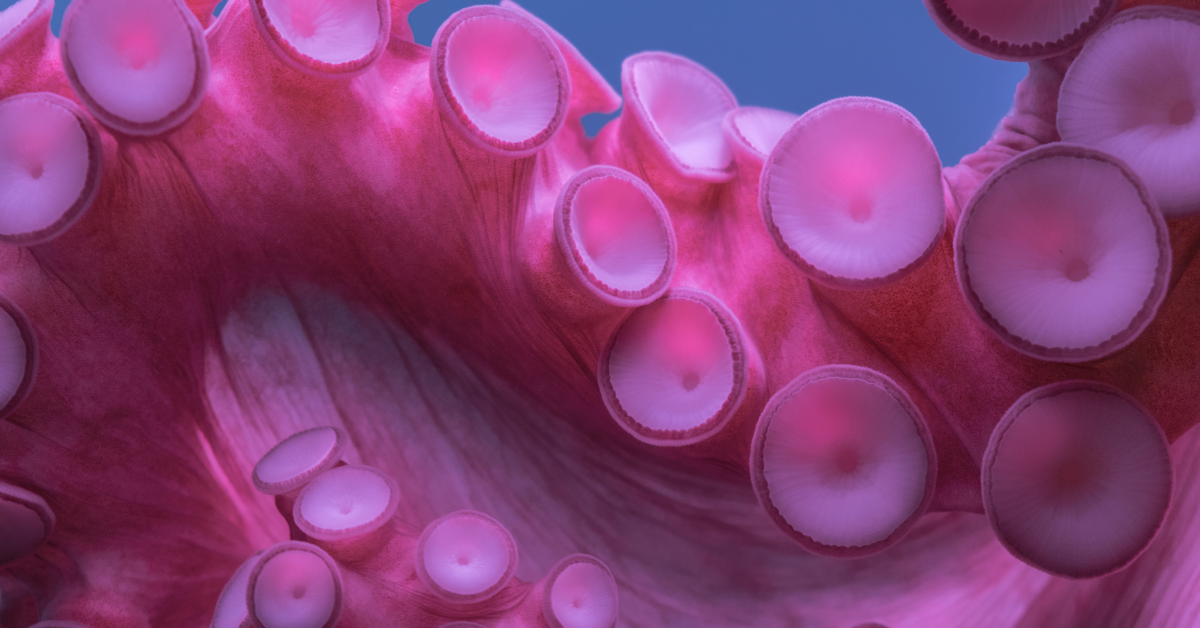
For example, when an octopus arm encounters a delicious crab, it doesn’t need to ‘ask’ the central brain about what to do next. It simply wraps its suckers around the tasty morsel and begins the feasting process. It’s like having a personal chef in each arm, instantly deciding what’s on the menu!
But remember, it’s not all independent work. The octopus’s central brain keeps a broad overview, coordinating the arms when necessary. For example, during complex tasks like unscrewing a jar to reach a tasty shrimp inside, the central brain steps in, synchronising the arms’ actions.
This unique neuronal design makes the octopus one of the most fascinating creatures in our oceans. It’s a brainy ballet dancer, conducting a symphony of independently moving limbs, all in perfect harmony.
Now, you may be wondering why this matters. Well, understanding the octopus’s intelligence can shed light on the evolution of intelligence itself. It shows us that intelligence isn’t limited to creatures with centralised brains, like us humans. Intelligence, it seems, is far more complex and diverse than we could ever imagine.
Moreover, studying the octopus’s arm-brain system could inspire new innovations in technology, such as advanced robotics and AI systems. Imagine a robot that can perform multiple tasks simultaneously and independently, just like an octopus!
So the next time you see an octopus, remember, you’re not merely looking at a creature with eight arms. You’re witnessing an incredible evolutionary marvel with many ‘minds’, each arm exploring, learning, and reacting to the world in its own unique way.

In the captivating world of marine biology, the octopus truly stands out, a testament to the boundless wonder and diversity of life beneath the waves. Keep exploring, keep learning, and remember, there’s always more than meets the eye in the mysterious depths of our oceans!

Enjoyed the read? Follow me!