
The Southern Hemisphere’s Guide to Pagan Festivals
 2
2
 0
0
 2
0
2
0
If you’ve ever wondered how pagans track time, celebrate seasonal shifts, or stay in sync with nature, meet the Wheel of the Year. It’s not a literal wheel, of course, but a symbolic cycle of eight festivals—solar and seasonal—celebrated throughout the year. And while most mainstream resources are tailored to the Northern Hemisphere, here in the South, we flip the script. Our seasons are reversed, which means so are our sabbats. It’s not just about tradition—it’s about alignment with the land around us.
The Wheel of the Year is made up of four solar festivals—solstices and equinoxes—and four cross-quarter days, which fall roughly halfway between each solstice and equinox. Each sabbat honours a particular point in the cycle of life, death, and rebirth. These aren’t just holidays—they’re moments to reflect, reset, reconnect, and move with the natural ebb and flow of energy.
So let’s walk the wheel—Southern Hemisphere style.
Litha – Summer Solstice (Around 21 December)
The height of summer. The sun is at its peak, days are long, energy is high, and the world feels expansive. Litha is about abundance, growth, and celebration. It’s a time to honour the light, the sun’s power, and the fullness of life. It’s also a reminder that even at its peak, light will now begin to wane. Bonfires, outdoor rituals, and gratitude for what’s blooming are common ways to mark it.
Lammas / Lughnasadh – First Harvest (Around 1 February)
Lammas is the festival of the first harvest—traditionally of grains. It’s a time to give thanks for what’s come to fruition and to begin preparing for what lies ahead. There’s an edge of bittersweetness here: celebration, yes, but also the first signs that the seasons are turning. Baking bread, sharing food, and reflecting on personal “harvests” are beautiful ways to honour Lammas.
Mabon – Autumn Equinox (Around 21 March)
Equal light and dark again—but tipping toward the dark. Mabon is the second harvest festival, about balance, gratitude, and release. It’s a moment to give thanks for what’s been gathered—physically and spiritually—and to begin letting go. Think of it as a soulful deep breath before the darker half of the year settles in.
Samhain – Ancestor Night (Around 1 May)
Samhain is often called the witch’s new year. It’s the final harvest and the beginning of the spiritual new cycle. The veil between worlds is thin, making it a time to honour ancestors, connect with spirits, and reflect on death and transformation. It’s not scary—it’s sacred. Many light candles for loved ones who’ve passed, create ancestor altars, or simply sit in quiet remembrance.
Yule – Winter Solstice (Around 21 June)
The longest night, the shortest day. Yule is the return of the light—when the sun is “reborn.” It’s a celebration of hope, resilience, and the quiet strength of darkness. Many traditions linked to modern Christmas—evergreens, candles, gift-giving—have their roots in Yule. It’s a time for rest, renewal, and planting seeds (both literal and metaphorical) for the year ahead.
Imbolc – Spark of Spring (Around 1 August)
Imbolc is the first sign that winter is loosening its grip. The earth is stirring, buds may begin to show, and energy starts to return. It’s a festival of purification, inspiration, and preparation. A time to set intentions, clear out the old, and open space for what’s to come. Traditionally linked to Brigid, a goddess of fire, healing, and creativity.
Ostara – Spring Equinox (Around 21 September)
Day and night in balance again—but now tipping toward light. Ostara is about fertility, renewal, growth, and potential. It’s when the world is waking up in earnest. Flowers bloom, animals stir, and we’re called to move forward with purpose. Egg symbolism, spring rituals, and fresh starts are common themes.
Beltane – Fire Festival of Fertility (Around 1 November)
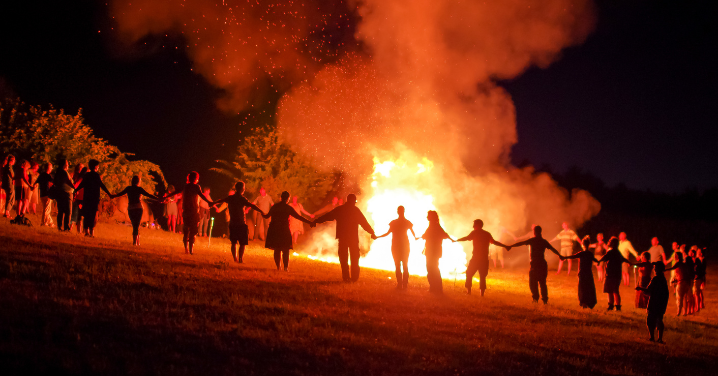
Beltane is all about life force. Passion, pleasure, creativity, connection. Where Samhain honours the dead, Beltane celebrates the living. Traditionally a fire festival, it’s linked to sensuality, vitality, and union—of body, spirit, and land. Bonfires, flower crowns, handfastings, and dancing are all part of the joy. It’s a great time for anything that brings you alive.
So why do these festivals matter?
Because they give structure and meaning to the turning of the year. They’re not about dogma—they’re about rhythm. They remind us that life moves in cycles. That light returns. That rest matters. That harvest follows effort. That death makes space for rebirth. They help us live in a way that’s rooted, intentional, and connected to the land we’re actually living on—not one written about in another hemisphere.
And for modern pagans, especially in the Southern Hemisphere, choosing to honour these dates in alignment with our seasons is an act of presence. It says, “I see what’s blooming. I feel the shift. I honour what’s real for me.”
Whether you celebrate all eight sabbats or just a few, whether you throw big gatherings or light a candle in quiet reflection, the Wheel of the Year offers a powerful framework for spiritual connection. It grounds you in the now while connecting you to something ancient. It keeps you looking inward and outward at once.
And perhaps most beautifully, it reminds us that change is constant—but it’s also sacred.