
Meet the Sarcastic Fringehead: Nature’s Loudest Mouth
 0
0
 0
0
 0
0
0
0
There are many ways to fight in the animal kingdom. Some creatures grow horns and ram into each other. Others puff themselves up like inflatable beach toys to look scarier. Some even spit acid or secrete toxins. But then there’s the sarcastic fringehead, a small, scrappy fish that decided subtlety wasn’t its thing. Instead, it opens its mouth so wide and so outrageously that it looks like it’s trying to swallow a tennis racket. And somehow, this flamboyant display is deadly serious. Welcome to the world of the sarcastic fringehead, where drama, jaw power, and underwater slapstick collide.
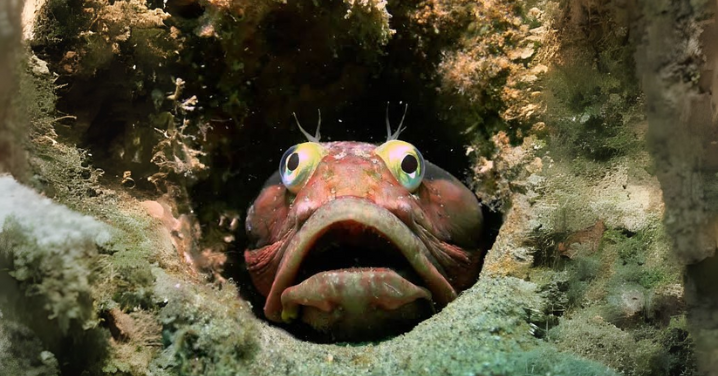
The name alone deserves a pause. Sarcastic fringehead. It sounds like a punk band you’d find at a dive bar in Cape Town or maybe an insult hurled at you during a particularly creative argument. The “fringehead” part comes from the little frilly appendages that sprout above its eyes, like tiny tassels. The “sarcastic” bit? No one’s entirely sure, but if you’ve ever seen this fish open its technicolour jaw and square off with another, you understand. It radiates the kind of exaggerated, mocking energy usually reserved for a teenager rolling their eyes at you.
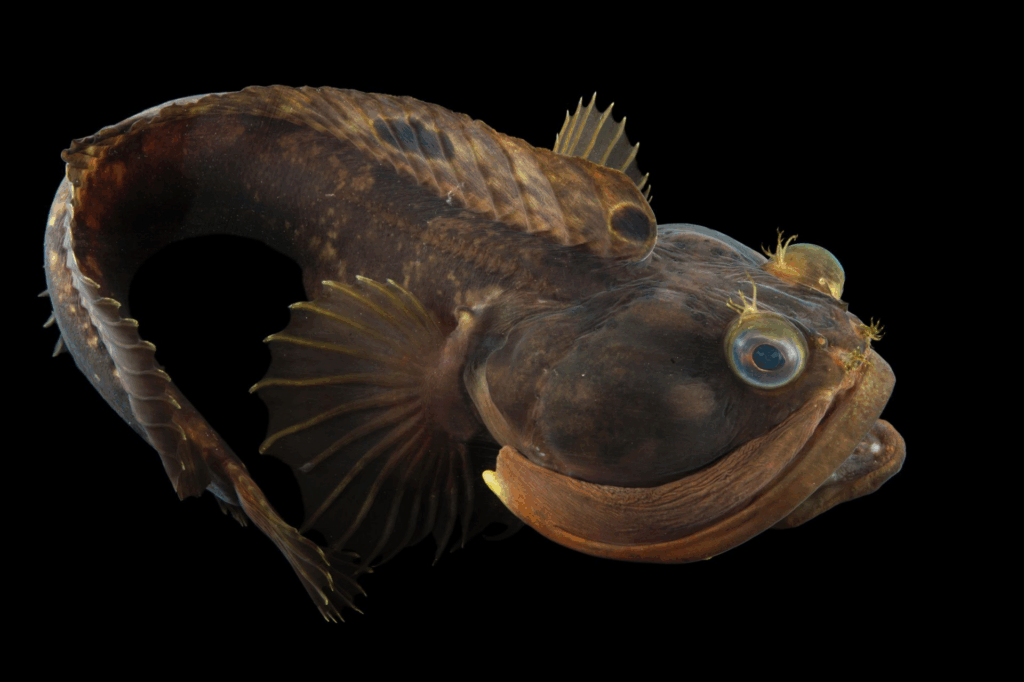
This fish itself isn’t very big, usually growing to around 30 centimetres. In the world of deep-sea horrors, that’s practically minnow-sized. But what it lacks in size, it more than makes up for in unhinged theatrics. Most of the time, the sarcastic fringehead lurks inside a shell, a crevice, or even an old soda can tossed overboard by humans. It’s not picky—it’ll move into any ready-made shelter it can find. And from there, it ambushes prey with lightning-fast lunges. Fish, squid, and other unlucky passers-by are fair game. It’s a classic case of small fish, big personality.
But where this fish really shines is in its territorial disputes. When two sarcastic fringeheads meet and decide they both want the same patch of real estate, things escalate quickly. They don’t bite or wrestle or chase each other around like amateurs. No, they open their jaws. And when I say open, I mean open. Their mouths unfurl like neon flower petals, revealing bright, membrane-lined jaws that look more like wings than mouths. Then they smash those jaws together in an underwater sumo match, each trying to prove who has the bigger, scarier trap. It looks completely ridiculous—like two muppets trying to kiss but missing every time—but to the fish, it’s deadly serious business. Whoever has the bigger, badder yawn wins.
The colours inside their mouths can be startling. Some are pink, others yellowish or even orange, and the contrast with their otherwise plain brownish body makes it all the more surreal. Imagine a fish that looks totally average until it suddenly reveals it’s secretly a carnival float. The dramatic reveal is half the point: it’s meant to shock rivals into submission. It’s evolution’s equivalent of shouting, “LOOK AT MY MOUTH!” and winning an argument because the other guy is too baffled to continue.
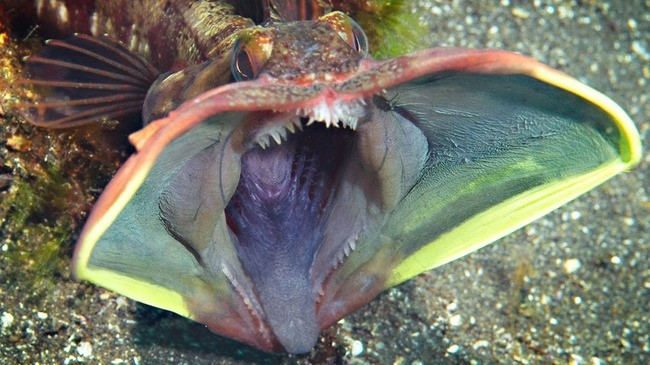
Despite the comedy factor for human observers, this mouth-wrestling behaviour is a highly effective way to avoid bloodshed. Fringeheads don’t actually want to rip each other to shreds—they just want the territory. By engaging in jaw-wars, they can settle disputes without either fish taking lethal damage. It’s like a fishy version of arm wrestling, except your arms are your entire face.
Now, let’s address the inevitable human angle. Because when people discover the sarcastic fringehead, the first reaction is usually laughter, followed by disbelief, followed by a weird sense of recognition. There’s something deeply relatable about two creatures whose main form of conflict resolution is just opening their mouths as wide as possible and seeing who looks more ridiculous. Honestly, it’s basically Twitter in fish form.
But beneath the humour, there’s some serious biology at play. The sarcastic fringehead’s jaw muscles are incredibly developed relative to its body size. That oversized mouth isn’t just for show—it’s also a weapon for grabbing prey. Combined with their aggressive territorial instincts, fringeheads have earned a reputation as fearless little lunatics. Divers who’ve encountered them in the wild report that these small fish will readily lunge at intruders many times their size, mouths gaping like they’re auditioning for a toothpaste commercial gone wrong.
The sarcasm, of course, is all ours. The fish isn’t trying to mock anyone—it’s just doing what evolution told it works. But from a human lens, it’s impossible not to read their behaviour as absurdly over-the-top, like nature decided to parody itself. This is why the sarcastic fringehead is the internet’s darling of weird marine life videos. The moment you see two of them square off, mouths blooming wide open until they look like unhinged clams on acid, you can’t help but laugh. It’s nature’s slapstick comedy routine, live from the seafloor.
And just when you think it can’t get stranger, here’s the kicker: these fish are part of a family known as “tube blennies,” many of which use old shells or even discarded bottles as their homes. That means sarcastic fringeheads are technically part of the plastic pollution problem too—but not in the way you’d think. They’ve adapted to live inside human trash. So while we’re choking the oceans with our garbage, these little lunatics are decorating their apartments with our leftovers and then screaming at each other with giant mouths. It’s tragic and hilarious all at once, which is sort of the running theme of the natural world.
And before anyone pipes up with the old line “but that’s not natural,” allow me to stop you right there. If a fish with tassels on its forehead can squat in an abandoned beer bottle, open its mouth like a technicolour parasol, and win fights by face-slapping another fish with its jaw, then “natural” has no neat definition. This is natural. This is evolution. This is proof that life doesn’t follow the tidy rules humans like to impose. If homophobes and transphobes ever found themselves face-to-face with a sarcastic fringehead, their entire worldview would collapse faster than their Wi-Fi during load shedding. Try explaining to a fish with a see-through throat that diversity isn’t part of the plan—it’ll just open its mouth wider until you shut up.
So what do we really take away from the sarcastic fringehead? That the ocean is absurdly creative. That survival strategies don’t have to be elegant to be effective. That sometimes the biggest statement you can make is to literally have the loudest mouth. And perhaps most importantly, that humour is baked into biology if you’re willing to see it. These fish don’t know they look ridiculous to us. They’re not auditioning for memes. They’re simply existing, in the only way they know how, and thriving in their tiny underwater territories. To me, that’s beautiful.
In the end, the sarcastic fringehead is more than just a bizarre fish. It’s a reminder that nature is not just about beauty, grace, or ferocity—it’s also about comedy, drama, and exaggeration. It’s an ongoing theatre production with roles for everything from stealthy predators to flamboyant weirdos, and the sarcastic fringehead has cornered the market on slapstick showmanship. The next time someone tries to argue that the natural world is predictable or “makes sense,” just show them a video of two sarcastic fringeheads pressing their gaping rainbow mouths together. Then sit back and watch as their sense of logic dissolves into laughter.
Because really, what could be more natural than two little fish yelling at each other underwater with mouths so large they look like they’re auditioning for a Monty Python sketch? The sarcastic fringehead doesn’t care if you find it ridiculous. It doesn’t care if you meme it to death. It only cares about its patch of ocean, its shelter, and having the last laugh in an eternal, jaw-dropping argument. And in the weird, wet theatre of life, that makes it one of the greatest characters of all.