

Every year, around the end of October, social media fills with carved pumpkins, haunted house invites, and at least three friends claiming to be “that person who goes all out for Halloween.” Meanwhile, here in South Africa, we’re in T-shirts, sweating through an early summer, and wondering why everyone in horror movies is dressed for autumn when we’re just trying not to melt. Still, even without the chilly weather or endless pumpkin spice, we love an excuse to have a jol. But behind the candy, costumes, and spooky décor lies a festival that’s thousands of years old — born from ancient fears, seasonal change, and a fascination with death that humans just can’t seem to shake.
Let’s rewind to the Celtic people of Ireland, Scotland, and parts of northern Europe — around 2000 years ago, long before anyone uttered the words “trick or treat.” Their year was divided by the rhythm of harvests and seasons, and 31 October marked the end of summer and the start of the cold, dark months. The Celts called this festival Samhain (pronounced “Sah-win”), which roughly translates to “summer’s end.” But Samhain wasn’t just a goodbye to sunshine and crops — it was a spiritual checkpoint. The Celts believed that on this night, the boundary between the living and the dead grew thin enough for spirits to slip through. Some spirits were welcome — ancestors returning home — while others were the mischievous or malevolent kind, blamed for spoiling food, causing illness, or just making life unpleasant.
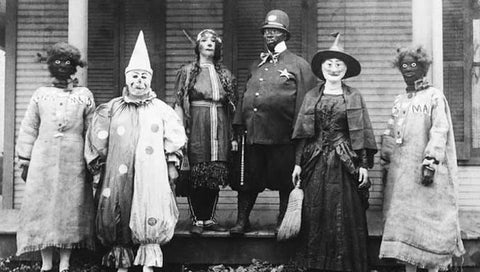
To protect themselves, people built massive bonfires on hilltops, offered food to the wandering souls, and wore animal hides and masks to confuse or frighten the unfriendly ones. Think of it as ancient cosplay with existential stakes. The idea was simple: blend in with the supernatural so it wouldn’t notice you were still alive. It was both a community event and a survival strategy — and somehow, also the ancestor of your friend wearing cat ears at a party.
When Christianity spread through Europe, it had a habit of absorbing rather than erasing local traditions. By the 8th century, Pope Gregory III moved All Saints’ Day — a feast honouring saints and martyrs — to 1 November. The night before became known as All Hallows’ Eve, which, over time and through the linguistic blender of history, became Halloween. The Church tried to shift the focus from ghosts to God, but people continued to merge the old and new. Bonfires and costumes remained, now joined by church bells, prayers for souls, and candle-lit vigils. It was part piety, part party — the medieval version of mixing gospel with a bit of gossip.
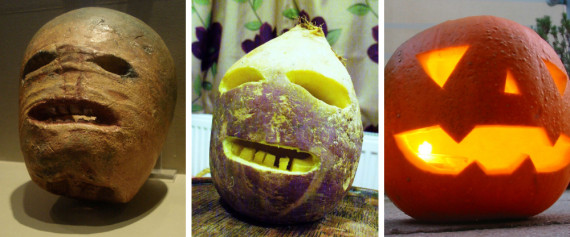
Fast forward several centuries to Ireland in the 1800s. The Irish still celebrated Halloween much like their ancestors, but famine, poverty, and mass migration sent millions across the ocean to America. There, their traditions took root and evolved. Turnips, once carved into lanterns to ward off spirits, were replaced by the more readily available pumpkin — softer, bigger, and frankly less likely to destroy your knife. The practice of “souling,” where people went door to door offering prayers for the dead in exchange for food, morphed into “guising,” where children performed little acts or songs for treats. Eventually, it all simplified into the modern form: knock, shout “trick or treat,” and hope for sweets instead of raisins.
By the early 20th century, Halloween had exploded into an American cultural phenomenon. It was no longer about honouring the dead — it was about community, fun, and occasionally scaring the life out of your neighbour with a fake spider. Films like Hocus Pocus and Halloween cemented its spooky reputation, and brands jumped in faster than you can say “limited edition glow-in-the-dark bucket.” What started as a night of spiritual reverence became a multi-billion-dollar event involving candy corn, haunted houses, and entire aisles of plastic skeletons.
Here in South Africa, our Halloween is… well, a little different. We don’t have maple leaves or chilly evenings, and most of us don’t carve pumpkins — not because we’re against it, but because finding a pumpkin big enough for that is like winning the Lotto. Still, you’ll find costume parties in every major city, supermarkets stacking fake cobwebs next to the braai charcoal, and a few suburban streets where brave kids try trick-or-treating under the watchful eyes of parents and security guards. It’s not a deep-rooted cultural thing here, but it’s catching on because, honestly, who doesn’t like a night dedicated to dressing weird, watching scary movies, and eating sweets without guilt?
Even though our seasons don’t line up with the original meaning of Samhain, there’s something oddly beautiful about the global spread of Halloween. It’s proof that humans, no matter where they live, love stories that dance with the dark. We’re drawn to rituals that help us face mortality — even if now it’s with laughter and glow sticks instead of bonfires and blood sacrifices. The costumes, the masks, the pretend frights — they all trace back to one simple idea: confronting the things that scare us by turning them into play.
So the next time you see someone in a zombie mask or a witch hat, remember — you’re witnessing the distant echo of an ancient festival that once celebrated death to honour life. Whether you’re lighting a candle, telling ghost stories, or just enjoying the chaos of a costume party, you’re part of a tradition that’s been around for millennia. And if you’re doing it in South Africa, you’re proving once again that we can take any excuse for fun, even one imported from the cold north, and make it our own.
Pass the Ghost Pops — the spirits are watching.