
Pretoria has this reputation for being the serious one. If South African cities were siblings, Cape Town would be the carefree creative, Johannesburg the overachieving hustler, and Pretoria… well, Pretoria would be the one wearing neatly ironed clothes, sipping rooibos, and correcting everyone’s pronunciation. But that’s just surface-level. Dig a bit deeper, and you’ll find that Pretoria’s beginnings are just as colourful—and occasionally absurd—as the jacarandas it’s famous for.
It all started with a few very determined people who didn’t much like being told what to do. After the Great Trek, a group of Voortrekkers decided they were going to start fresh and plant a new capital, one that wasn’t under British control. They were looking for independence, identity, and probably a nice spot with decent grazing land. In 1855, Pretoria was founded and named after Andries Pretorius—a man who’d led the Voortrekkers to victory at the Battle of Blood River. If that name sounds a bit intense, that’s because it was. Everything back then was done with full commitment and very little chill.
What’s interesting about Pretoria is that it wasn’t built in a rush of gold fever like Johannesburg, or to restock vegetables like Cape Town. It was calculated, thought-out, picked like someone choosing the right spot to build a forever home. The location was chosen for its river, its fertility, and the hills that would offer a bit of natural defence. It was meant to be the calm centre of what the Voortrekkers hoped would be a self-governed and righteous land. Whether they succeeded or not depends on which history book you’re reading, but Pretoria stuck around and slowly became something bigger than its founders probably imagined.
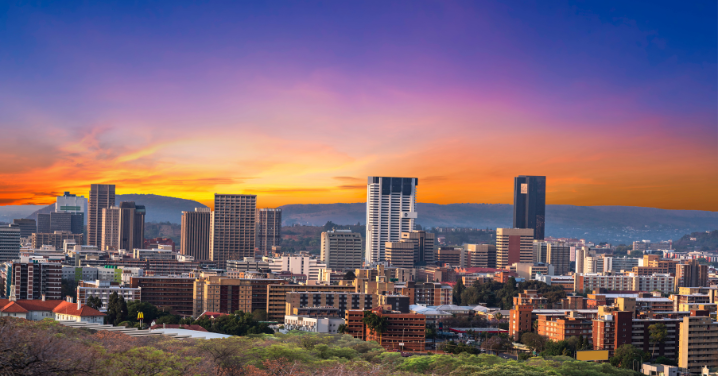
Fast-forward through a few decades of conflict, negotiation, and the odd treaty scribbled on dodgy paper, and Pretoria evolved into the administrative capital of South Africa. That’s the reason all the politicians are based here—it’s the city of government, embassies, and presidential motorcades. It’s where decisions get made, or at least where they’re meant to. But despite its buttoned-up reputation, Pretoria has its fair share of quirks and contradictions.
Take the jacarandas, for one. The entire city explodes into purple every spring like it’s been sponsored by a lavender-scented candle brand. Students swear the first blossom you see is lucky if it happens before exams. Photographers camp under trees like they’re waiting for a rock star to appear. And everyone—from lifelong residents to first-time visitors—can’t help but get a bit emotional about those blooming trees. It’s oddly romantic for a city that’s supposed to be all business.
Then there’s the architecture. Pretoria doesn’t mess about with scale. The Union Buildings loom over the city like a stern aunt watching over a family reunion, always majestic and slightly judging. Designed by Herbert Baker, they’ve seen more handshakes, speeches, and political pivots than anyone can count. But walk a few blocks down and you’ll find a weirdly endearing mix of styles—Edwardian relics, modernist blocks, art deco gems, and the occasional building that looks like it came from a flat-pack catalogue.
Culturally, Pretoria walks a fine line between proud tradition and youthful rebellion. On one hand, it holds tight to its Afrikaans roots—with language, music, and events that honour its heritage. On the other, there’s a whole generation coming through with a different energy—multilingual, multicultural, and not particularly bothered about the way things used to be done. The result is a city that sometimes feels like it’s in polite conversation with itself across generations.
It’s also a city that quietly holds some of the country’s most important spaces. Freedom Park, for instance, isn’t just a memorial—it’s a deep breath. A place where the past, painful as it is, is given space to be acknowledged properly. Or Church Square, where you can sip coffee next to a statue while trams and traffic try to figure out who has right of way. These spots don’t shout—but they say a lot, if you’re listening.
And while it’s known for its rules and order, Pretoria isn’t without personality. The local markets have flair, the music scene is alive and growing, and the food—especially the street-side boerewors rolls—is solid comfort in bread form. On a Saturday, you’ll see cyclists in full Lycra followed by people walking dogs that look like they should have their own Instagram pages. There’s an underlying calm to Pretoria that’s weirdly addictive. The pace is slower, but not sleepy. It’s measured.
Weather-wise, it’s kinder than you’d expect. Winters are crisp and dry, summers bring big skies and thunderstorms that feel like nature letting off steam. It’s not as dramatic as Joburg or as temperamental as Cape Town, but it does love a good lightning show in the late afternoon. And if you’ve ever watched those clouds roll in over the hills, you’ll know there’s something quietly beautiful about it.
If Pretoria were a person, it’d be the quiet one at the table who doesn’t say much unless it has something worth saying. It doesn’t try to steal the spotlight. It waits. Watches. Holds its ground. And maybe that’s the charm. Because once you’ve spent some time with it, Pretoria reveals itself not as dull or uptight, but as layered. Complex. Occasionally odd, often surprising, and always steady.
So yes, it’s easy to underestimate Pretoria—especially if you’ve only ever passed through it on your way somewhere else. But it’s a city with roots. It remembers things. It holds the country’s paperwork and its history in the same breath. And even though it wasn’t born in a rush of fortune or conquest, it quietly shaped South Africa in ways we don’t always give it credit for.