What Modern Paganism Really Looks Like (Spoiler: It’s Not Hollywood)
 0
0
 0
0
 0
0
0
0
Right, so you’ve seen some movie where the “witch” wears black lipstick, lives in a forest with her 12 cats, and summons storms because someone spilled her oat milk. And now you’re thinking, “Is that what Paganism actually is?” Spoiler: not even close, mate. Sit back, grab a cold one, and let’s talk about modern Paganism—the real kind, not the CGI-enhanced, broomstick-flying circus you’ve seen on telly.
First thing you need to know—Paganism is one of those umbrella terms, like saying “sport” when you could mean anything from lawn bowls to cage fighting. There’s a whole bunch of different paths under the Pagan tent, and yeah, some people do wear cloaks (especially in winter, because they’re warm, alright?) but mostly, it’s normal people just trying to connect with nature, the seasons, and maybe a deity or two that doesn’t come with a lightning bolt or an apocalypse complex.
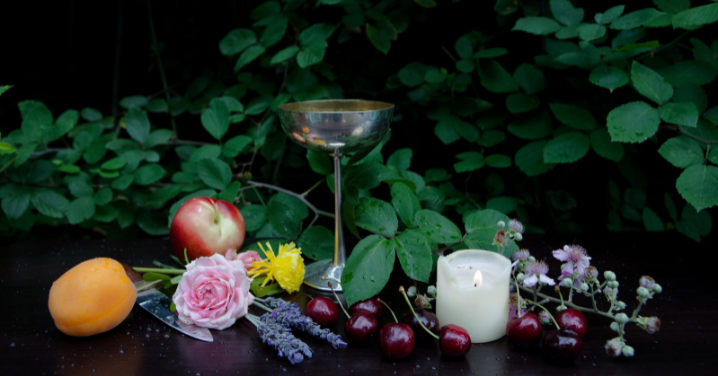
Now, don’t get scared off by the word “ritual.” You probably do rituals all the time—morning coffee, Sunday braai, awkward small talk with the neighbour while taking the bins out. In Paganism, rituals are just intentional acts that connect you to the cycles of the earth. Light a candle at full moon, leave an offering in the garden, do a little gratitude journaling after your morning jog (okay, walk)—boom, you’re halfway there.
A lot of folks are drawn to Paganism because it’s flexible. There’s no holy book yelling at you for wearing the wrong shoes, and nobody’s counting how many times you meditate. You’re allowed to ask questions. You’re allowed to mix it up. It’s more “choose your own adventure” than “strict rulebook.” Some people honour ancient gods like Thor, Isis, or Brigid. Others just like the vibe of celebrating the solstices and having a moment of peace under a tree. No one’s going to smite you for skipping a ritual because you had food poisoning or your boss dropped a 5pm Friday deadline on you.
And no, being Pagan doesn’t mean you hate science. You can believe in evolution and still mark the equinox with a bonfire and some marshmallows. It’s not either-or. In fact, a lot of Pagans are nature nerds who know more about local plants than your high school biology teacher ever did. It’s less “let’s hex Karen from HR” and more “let’s not destroy the planet.”
You’ve probably already met modern Pagans without even realising it. They’re not walking around with pentagrams and fog machines (well, not most of the time). They could be your yoga instructor, your tattoo artist, your local barista, or the guy fixing your car while humming to Stevie Nicks. They might celebrate Samhain (that’s like the original Halloween) or do a little candle lighting on Beltane, but most of the time they’re just doing life—feeding pets, working jobs, watching Netflix.
One of the biggest myths to bin straight away is the whole “Pagan equals devil worship” idea. Paganism predates the modern devil concept, and Satan’s got nothing to do with it. That’s like assuming everyone with a beard is part of a pirate crew. Some Pagans are witches, sure, but not the broom-riding, toad-boiling kind. Think herbal teas, healing crystals, and that one mate who always smells like incense and gives oddly accurate advice about your relationship.
It’s also not all white robes and fairy dust. Paganism isn’t a fantasy cosplay. It’s often about community, activism, and mindfulness. Loads of Pagans care deeply about the environment, animal rights, and personal growth. You’ll find them at climate marches, rewilding projects, or just sitting quietly with a cuppa, chatting with their plants like they’re old mates (which, honestly, is kind of charming).
And let’s be honest—there’s something appealing about a belief system that doesn’t think you’re broken or sinful by default. Paganism generally celebrates individuality, queerness, neurodiversity, and people who think differently. There’s no pressure to be perfect, just present. Which, let’s face it, is more achievable after three glasses of pinot than most religions make it sound.
Some people get into it via books—usually the kind with moons on the cover and titles like Witchcraft for Your Overworked Soul. Others wander in through curiosity, a love of mythology, or because they once hugged a tree and felt genuinely better. It’s not always a spiritual lightning bolt moment. Sometimes it’s a slow shift, a quiet yes to something that just… fits.
Still worried it’s too “out there”? Honestly, if you’ve ever felt calm during a sunset, felt a bit recharged after a swim in the sea, or whispered “please don’t be late” to your kettle on a Monday morning, you’ve already dipped your toe into the vibe. Paganism just makes space for those moments, gives them a little more intention, and occasionally throws in some drumming.
Modern Pagans often blend tech with tradition. You’ll see them with tarot apps on their phones, or posting moon phase reminders on Instagram. It’s not about rejecting modern life—it’s about weaving in a bit more awareness. It’s mindfulness with a sprinkle of myth. And yes, some do wear crystals in their bras. We’re not judging.
You don’t have to be born into it. You don’t need initiation rites under a blood moon while chanting in Latin. You can read, explore, question, and find your own pace. Some people go full-on ritual robes and seasonal feasts, others just take quiet walks in the park and honour the turn of the seasons. It’s about connection—not performance.
And if you’re wondering, “Can I still be Pagan if I also believe in X, Y, or Z?”—the answer is usually “Yeah, why not?” Paganism’s not out to gatekeep your spirituality. As long as you’re respectful, open-minded, and not being a knob about it, you’ll fit in fine.
So next time someone brings up Paganism and you picture a witch with glowing red eyes cackling in the woods, maybe replace that image with your artsy cousin who makes her own soap, attends solstice picnics, and talks to her cat like it’s her therapist. That’s probably closer to the truth.
At the end of the day, modern Paganism is about living in tune with nature, respecting different paths, and maybe finding a bit of magic in the everyday. No broomsticks required—unless you actually need to sweep.