

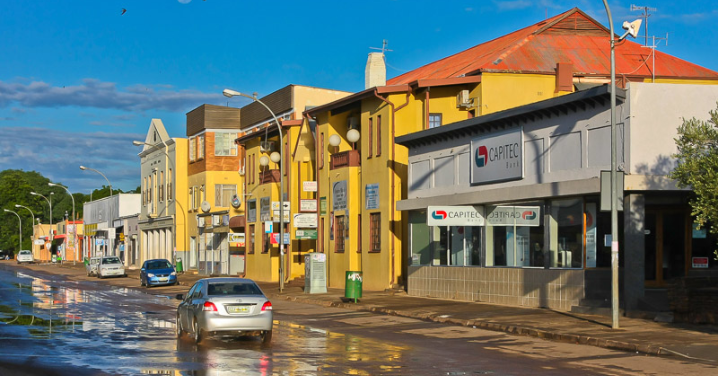
You don’t expect Kuruman to surprise you. It’s the kind of town you hear about in geography class, maybe once during a family road trip when someone mentions it’s “on the way” to somewhere else. But give it five minutes and it’ll leave you blinking in the sunlight wondering why no one ever told you it had so much personality. It’s not flashy or dramatic. It’s quiet, steady, and full of the kind of stories that don’t scream—they whisper, wait, and then stick with you long after you’ve left.
The whole thing centres around water. And not just any water—fresh, clean, endless water in the middle of a region that doesn’t exactly hand that out for free. The Eye of Kuruman is what locals call it, and it’s been bubbling up for centuries, right in the heart of the Kalahari. A natural spring that pumps out 20 to 30 million litres of water a day, whether you ask it to or not. It’s the reason the town exists. People settled there because of that water. In a place where heat often wins and dryness is a daily theme, Kuruman somehow found a loophole and built a life around a source that never runs dry.
Now, throw your mind back to the early 1800s, when a group of missionaries turned up with Bibles, strong opinions, and probably very little idea of how intense the Kalahari sun can be. Robert Moffat was one of the first to really settle here—a Scottish missionary who not only built a mission station but also translated the Bible into Setswana and printed it locally. That’s not just admin; it’s a feat. Imagine dealing with scorpions, extreme heat, cultural barriers, and somehow still managing to operate a printing press. That station’s still standing, by the way. You can visit it and see where it all happened—old bricks, thick walls, and the quiet pride of something that lasted.
Kuruman became known as the “Oasis of the Kalahari”—and it fits. You walk into town, and it’s not what you expect. It’s not full of tourist traps or grand gestures. It’s got that honest, grounded kind of vibe. The people aren’t putting on a show. They’re just living. There’s something refreshing about that. A place that doesn’t try to impress you but still kind of does.
And then there’s the cave. Yes, Kuruman has a cave. Not just a random hole in a hill, but a full-on limestone wonder called the Kuruman Wonderwerk Cave. It’s over 150 metres deep and packed with history. Archaeologists have found signs of human life here dating back nearly two million years. Fire pits, stone tools, old bones—the works. If that doesn’t shake your idea of “small town,” nothing will. Kuruman, it turns out, has been on the human map for a lot longer than most places, even if no one put it on Instagram until recently.
Despite all this, Kuruman still flies under the radar. It doesn’t scream for attention, which is kind of its charm. It’s got one of the best natural springs in the world, deep cultural and missionary history, ancient caves with prehistoric secrets—and yet people still drive through it on the way to somewhere else. But that’s the thing with places like Kuruman—they’re not here to entertain you. They’re just here. Solid. Constant. Surprising if you take a second look.
It’s not just the history that gives it weight. The present-day Kuruman has its own rhythm. People go about their business. Kids walk to school. Aunties sell vetkoek on corners. Bakkies bounce past with windows down, and the sun does what the sun always does—shows up on time and sticks around all day. There’s a kind of simplicity to the place that makes you exhale, the good kind, like your shoulders just dropped and your phone stopped mattering.
And for such a quiet place, it’s got layers. There’s the influence of Setswana culture, visible and alive, not buried under concrete or glossed over. There are churches with stories, dusty football fields with dreams, and businesses run on first names and strong coffee. It’s community in the old-school sense—people knowing people, checking in, helping out when needed without needing to announce it.
Kuruman isn’t trying to be a capital, a hotspot, or a trendy destination. It doesn’t dress itself up. But spend a day there, walk past the Eye, step into the Moffat Mission, and sit for a moment with the sheer scale of the Wonderwerk Cave, and you’ll start to get it. This is a place that’s been part of something bigger for a long, long time—even if it doesn’t always get the credit.
It’s funny how often we overlook the small towns, expecting them to be mere pit stops. But Kuruman doesn’t need to shout to have value. Its story runs deep—like the spring that made it possible, like the cave that holds traces of ancient fires, like the people who stayed even when there were easier places to be.
So next time someone mentions Kuruman and you’re tempted to shrug it off, maybe pause. Think about the town with the endless spring in the desert, the two-million-year-old cave, and the Scotsman with a printing press. Think about the place that quietly shaped stories without asking for headlines. And then maybe go visit. Just remember to bring sunscreen. That Kalahari sun doesn’t joke around.