
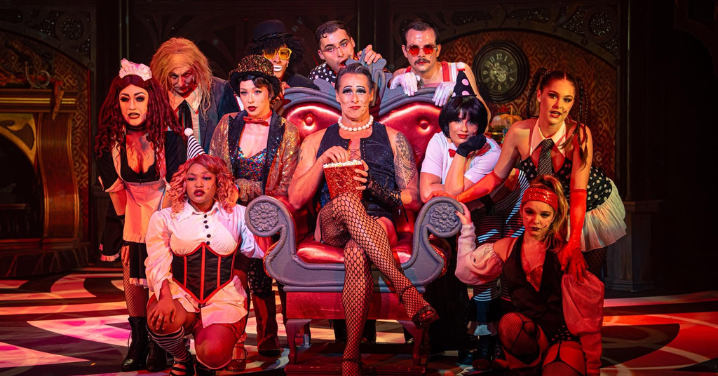
There are ordinary nights at the theatre, and then there are nights when a man in towering heels, a corset and enough confidence to power half of Johannesburg walks onto the stage and immediately makes everyone else in the room seem underdressed.
The Rocky Horror Show has arrived at the Pieter Toerien Main Theatre at Montecasino, and subtle it most certainly is not.
Nor should it be.
This is a production that arrives with its hips swinging, its guitars roaring, and its tongue planted so firmly in its cheek that somebody should probably check whether it requires medical attention. It is loud, gloriously strange, shamelessly theatrical and filled with the kind of infectious energy that reminds you why sitting inside a dark theatre with hundreds of strangers can still feel like one of the most exciting things in the world.
Directed by Steven Stead and presented by Pieter Toerien Productions in association with the Luitingh Alexander Musical Theatre Academy, better known as LAMTA, this staging has transferred to Johannesburg following its Cape Town season at Theatre on the Bay. Much of the acclaimed company has returned, with Anne Power stepping into the role of the Narrator for the Johannesburg season.
From the moment the theatre darkens, it becomes clear that this is not going to be a quiet evening of tasteful restraint.
Thank goodness for that.
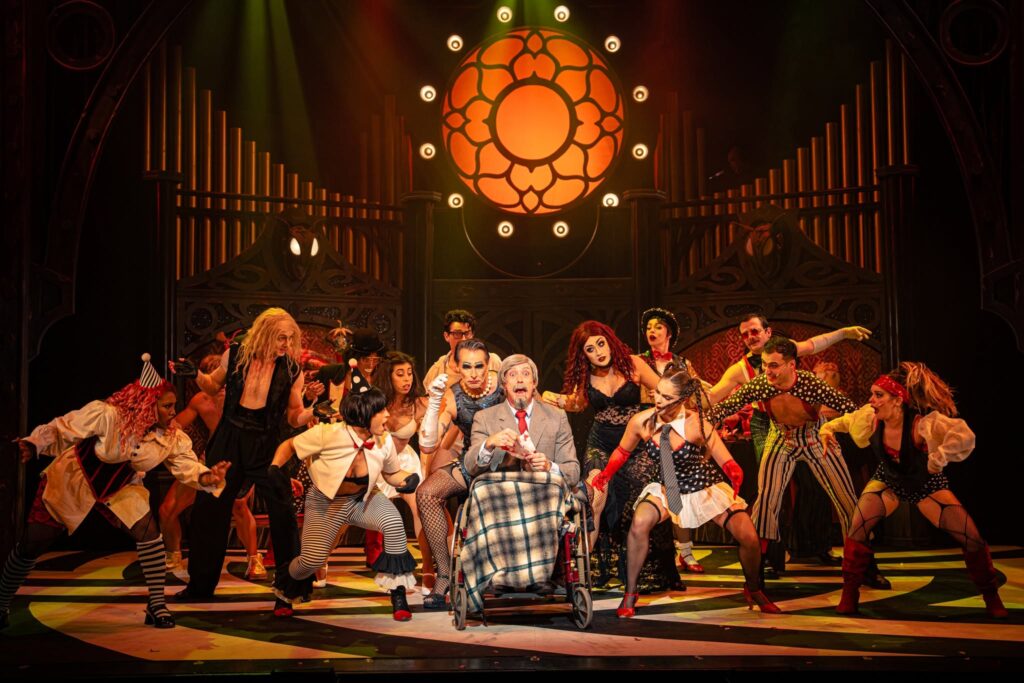
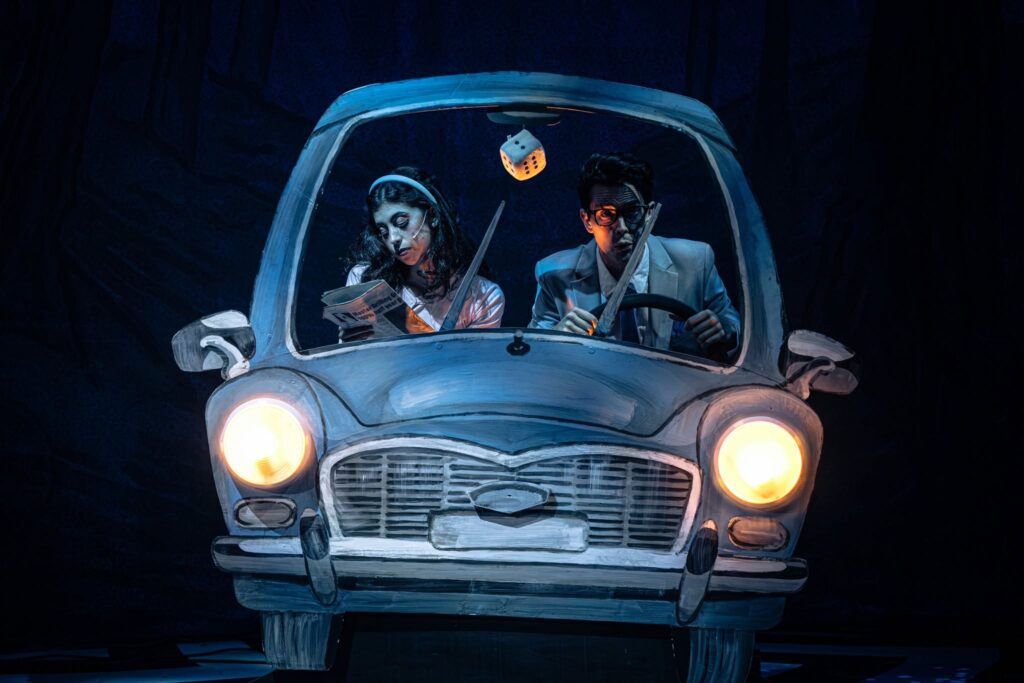
Before the cast has sung a single note, Greg King’s gothic set has already invited you into the wonderfully questionable world of Rocky Horror. The castle feels grand, theatrical and slightly dangerous. It is the sort of place where every sensible instinct tells you not to enter, but curiosity, poor decision-making and a flat tyre insist otherwise.
In other words, it is exactly where Brad and Janet are going.
The production looks magnificent without ever becoming too polished for its own good. There is still grit beneath the glamour. The stage feels decadent, eerie and deliberately excessive, while Faheem Bardien’s lighting gives the castle the atmosphere of a glamorous nightmare that has recently discovered a smoke machine.
Terence Bray’s costumes complete the transformation. The clothes do not merely dress the characters, they reveal personality, power and desire before a word has been spoken. Corsets, glitter, leather, sequins and towering heels are worn with the confidence of people who have never once stood in front of a mirror wondering whether the outfit might be too much.
There is no such thing as too much here.
That is practically the house rule.
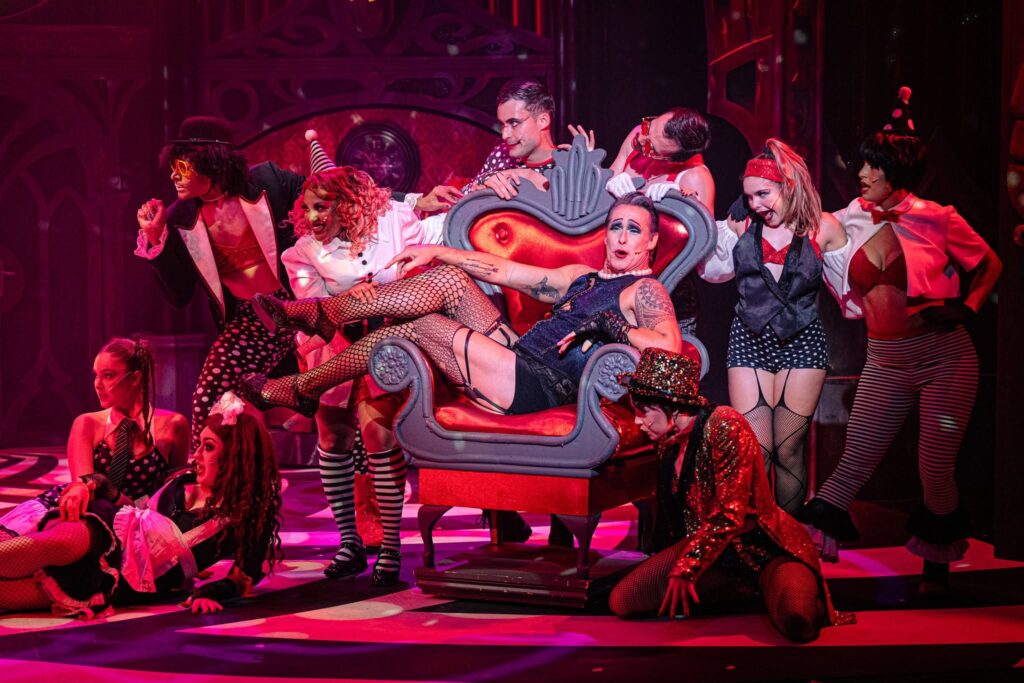
Richard O’Brien’s score remains as addictive as ever, blending rock, science fiction, camp melodrama and musical theatre into something that should probably collapse under the weight of its own eccentricity. Instead, it works beautifully.
Songs such as Time Warp, Sweet Transvestite and Hot Patootie are so deeply embedded in popular culture that it would be easy for a production to coast on recognition alone. This company does not. Each number feels alive rather than dutifully recreated.
The vocals throughout the production are powerful, clear and filled with character. There is a welcome sense that the performers are not simply trying to sing the songs well. They are telling the story through them, even when that story involves aliens, laboratory creations and increasingly flexible interpretations of fidelity.
When the opening notes of Time Warp arrive, the atmosphere shifts instantly. The audience knows what is coming, the performers know that the audience knows, and the entire theatre seems to lean forward together. By the time the chorus hits, remaining emotionally detached is no longer an option.
Your knees may even begin doing things you did not formally authorise.
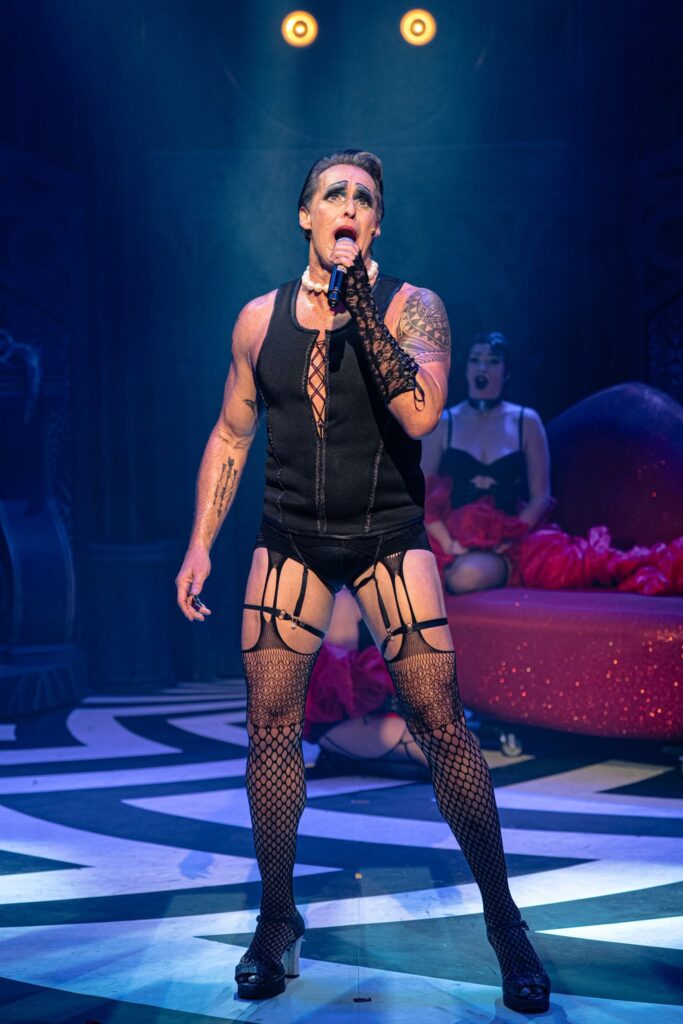
At the centre of it all is Craig Urbani, who does not merely play Dr Frank-N-Furter. He occupies every inch of the role.
From his entrance, Urbani commands the theatre with the confidence of someone who knows exactly what effect he is having and intends to make the most of it. His Frank is magnetic, dangerous, hilarious and unexpectedly vulnerable. He can move from seduction to rage, from arrogance to genuine hurt, sometimes within the same scene. Those emotional turns are handled with enough precision that Frank never becomes merely a collection of poses and punchlines.
Although the poses are excellent.
Urbani’s rich baritone gives the character real authority, particularly during Sweet Transvestite, where he holds the audience with an ease that looks almost indecently effortless. There is confidence in every movement, every glance and every carefully judged pause.
Frank is frequently outrageous, but Urbani never treats him as a joke. That distinction matters. Beneath all the makeup, swagger and manipulation is someone driven by appetite, insecurity and an absolute refusal to live quietly. Urbani allows us to see the loneliness beneath the spectacle without dulling any of the character’s sharp edges.
He is funny because Frank believes himself completely.
He is moving for exactly the same reason.
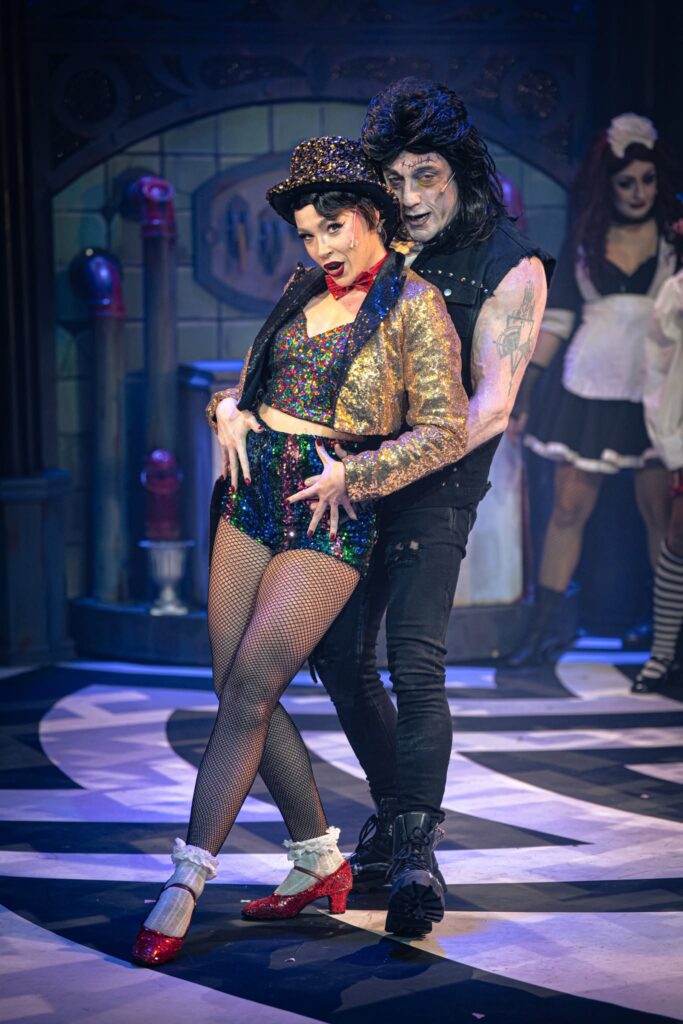
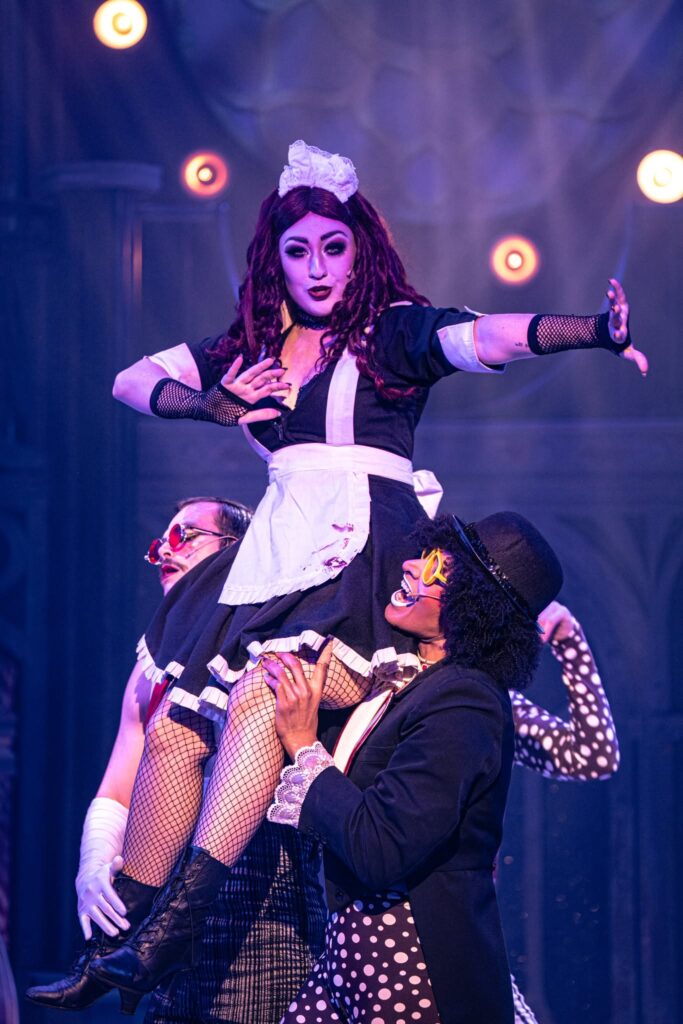
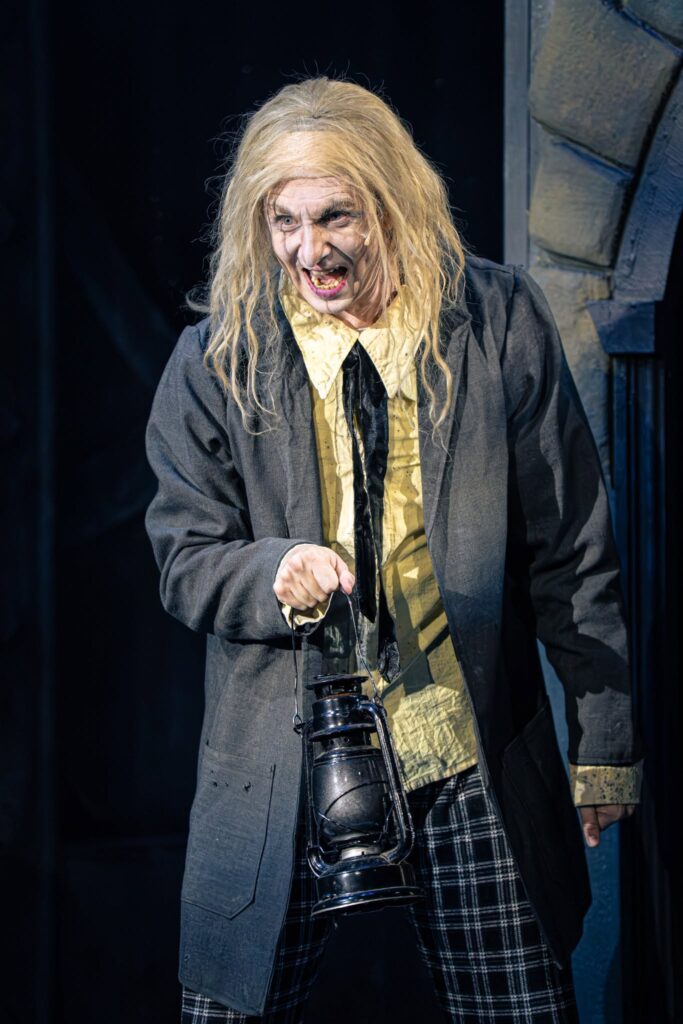
Schoeman Smit is another standout as Riff Raff, although describing him merely as unsettling feels rather like describing a thunderstorm as slightly damp.
His Riff Raff is watchful, twitchy and filled with barely contained resentment. Even when he is standing at the edge of a scene, Smit seems to be plotting something unpleasant. Every tilted shoulder, suspicious glance and tightly controlled movement contributes to a character who appears permanently caught between obedience and mutiny. He is creepy without forcing it and funny without softening the menace.
You find yourself watching him even when the action is happening elsewhere. That is partly because he is magnetic. It is also because turning your back on him seems unwise.
Smit’s voice is powerful, his comic timing is precise, and his transformation as the story moves towards its final confrontation is handled with terrific conviction. He understands that Riff Raff is not merely a peculiar servant lurking in the castle. He is a character waiting for his moment.
When it arrives, Smit takes it.
Anne Power, meanwhile, plays the Narrator as a stern, composed librarian who has somehow found herself responsible for documenting the most inappropriate field trip in theatrical history.
It is inspired.
Her precise delivery, clipped manner and deliciously controlled irritation make her an ideal target for the audience callbacks that have become part of Rocky Horror tradition. Rather than ignoring the interruptions, Power responds with dry wit and impeccable timing.
Watching her maintain an air of dignity while a theatre full of people tries to derail her is one of the evening’s great pleasures. She knows exactly how long to hold a pause. She knows when to glare. Most importantly, she knows how to make the audience believe that its interruption has genuinely offended her, even though she is very clearly several steps ahead.
There is something wonderfully satisfying about watching a performer command a noisy audience without ever appearing to raise her voice. Power does it with the authority of a headmistress who has heard every possible excuse and accepted none of them.
You could listen to her read a municipal electricity bill and somehow feel that it had dramatic stakes.
Robert Everson and Léa Blerk are wonderfully matched as Brad and Janet, the clean-cut couple whose evening takes a very sharp turn away from wholesome romance.
Everson plays Brad with complete commitment to the character’s stiff, nervous masculinity. He is awkward, earnest and frequently overwhelmed, which makes his gradual unravelling all the more entertaining. There is something inherently funny about a man desperately trying to maintain control while almost everyone around him has stopped pretending control matters.
Everson leans into that discomfort without reducing Brad to a fool. His performance is broad when it needs to be, but grounded enough that Brad remains recognisable beneath the increasingly ridiculous circumstances.
Blerk’s Janet begins as wide-eyed innocence in sensible clothing, but her transformation is one of the production’s great pleasures. She allows the character’s curiosity to emerge gradually. Janet is not simply corrupted by the castle. She begins discovering parts of herself that conventional life has kept neatly folded away, presumably beside the emergency towels.
Blerk’s vocals are excellent, and she handles Janet’s comic and sensual awakening with confidence. Her performance becomes increasingly fearless as the story progresses, yet she never loses the character’s vulnerability.
Together, Everson and Blerk make Brad and Janet feel like more than convenient victims wandering into a strange castle. Their journey becomes a funny and surprisingly revealing examination of what happens when repression meets opportunity.
Opportunity, in this case, happens to be wearing heels.
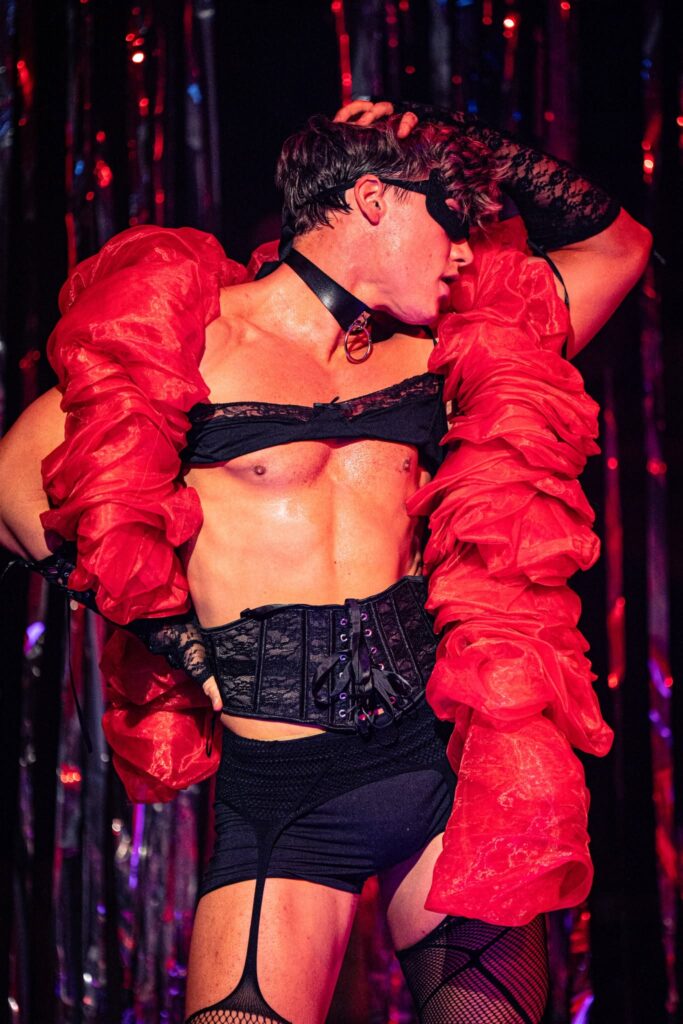
Micah Stojakovic brings warmth, innocence and an impressive physical presence to Rocky, Frank’s newly created vision of masculine perfection. Rocky could easily become little more than an attractive prop, but Stojakovic gives him personality.
His Rocky has a goofy sweetness that makes him immediately likeable. There is something endearing about watching this sculpted creation trying to understand the world around him, particularly when most of the people explaining it are clearly not suitable guardians.
He has the physique the role demands, but it is his comic charm that makes the character work. Rocky is strong, bewildered and strangely lovable. He is essentially a golden retriever who has been given abdominal muscles and placed in an unsafe laboratory environment.
Somebody should probably call a responsible adult.
Unfortunately, there do not appear to be any in the castle.
Anna Olivier’s Columbia is bright, energetic and impossible to ignore. She enters the production like a sequinned firecracker, filling her scenes with enthusiasm, movement and terrific comic energy. Her Columbia is entertaining from the start, but Olivier gradually reveals the pain hidden beneath the sparkle.
That emotional shift becomes particularly effective in the final part of the show. The character’s heartbreak could easily feel out of place in a production moving at such an energetic pace, but Olivier earns the moment. She lets the comedy fall away and allows Columbia’s hurt to surface without overplaying it.
For a character initially presented as pure excitement, the vulnerability lands with surprising force. It is a reminder that beneath the costumes, jokes and liberation, many of these characters are still looking for affection, acceptance and somewhere to belong.
Rocky Horror may be outrageous, but it is not emotionally empty.
Olivier understands that completely.
Jasmine Minter is quietly brilliant as Magenta. Her performance is sharp, controlled and filled with small details. She never needs to push herself to the front of a scene to make an impression. A glance, a gesture or a change in posture is often enough.
Minter’s Magenta feels as though she knows far more than she intends to reveal. She watches the chaos around her with a mixture of amusement and impatience, waiting for the moment when the game changes. Alongside Smit’s Riff Raff, she helps establish the uneasy sense that Frank’s control over the castle may not be as secure as he believes.
Zak Hendrikz, meanwhile, tears into the role of Eddie with gleeful force. Hot Patootie becomes a miniature rock concert inside the production, and Hendrikz throws himself into it with the kind of commitment that makes you wonder whether the theatre has reinforced the roof.
His Eddie is loud, physical and instantly memorable. Hendrikz later returns as Dr Scott, giving him the opportunity to display a completely different comic energy. Both roles are played broadly, but never lazily. He understands precisely what kind of production he is in and meets it at full volume.
One of the strongest elements of this production is the commitment of its ensemble. Miguel de Sampaio, Tjaart van der Walt, Cleo Wesley, Alessia Gironi, Taya Pearson, Gabi Knight and Sasha Duffy populate the world with constant energy and distinct personality.
There is no sense of performers simply waiting in the background for their next choreographed moment. Every person on stage appears to have a private motive, a relationship to the action and an opinion about whatever strange behaviour is currently unfolding.
That attention to detail gives the castle life. It also means the audience is constantly rewarded for looking beyond the centre of the stage. Small reactions, glances and bits of physical comedy are happening everywhere.
The choreography by Duane Alexander and Naoline Quinzin channels that energy without allowing the stage to become visually confused. The movement is bold, athletic and playful, fitting the music while preserving the individuality of the characters.
The ensemble does not merely support the leads.
They create the atmosphere that allows the entire production to work.
Let us also address the corset-clad elephant in the room.
The Rocky Horror Show contains sexual themes, adult humour and enough innuendo to make an innocent sentence feel as though it should close the curtains first.
Much of it is hilarious.
The production gleefully plays with desire, repression, temptation and sexual freedom. There are suggestive movements, provocative costumes, double meanings and moments when the subtext stops being subtext and starts introducing itself to the audience.
The humour is knowingly outrageous rather than cruel. It celebrates excess, experimentation and the joy of refusing to behave according to somebody else’s rules.
However, this is definitely not a show for little ones.
Parents should not be misled by the fact that it is a colourful musical with catchy songs. This is not family entertainment unless your family discussions are considerably more advanced than most.
Older teenagers may be comfortable with the material depending on their maturity, but younger children are likely to encounter several concepts their parents were not planning to explain in the Montecasino parking area.
The innuendo is part of the fun, and this production delivers it with perfect comic confidence.
Just arrange the babysitter.
A production of The Rocky Horror Show also depends partly on the people sitting in the seats. This is not a musical where the audience remains silent, applauds politely and waits for interval to discuss the parking validation.
People arrive ready to participate.
They dress up. They call back. They sing along. They laugh loudly and sometimes respond to the Narrator with the confidence of people who have been waiting all week to shout in a respectable theatre.
On opening night, the atmosphere was electric.
The audience understood the assignment.
There is something wonderfully communal about hearing an entire theatre react to familiar lines and musical cues. Long-time fans know what is coming, while newcomers quickly realise that ordinary theatre etiquette has been loosened slightly.
The Rocky Horror Show is live theatre at its most communal, eccentric and joyfully unapologetic.
By the end, the audience is on its feet, the castle has surrendered to chaos and personal dignity has become a distant memory.
Exactly as it should be.
The Rocky Horror Show runs at the Pieter Toerien Main Theatre at Montecasino until 16 August 2026. Ticket prices vary according to the performance and seating selection, with bookings available through Webtickets.