

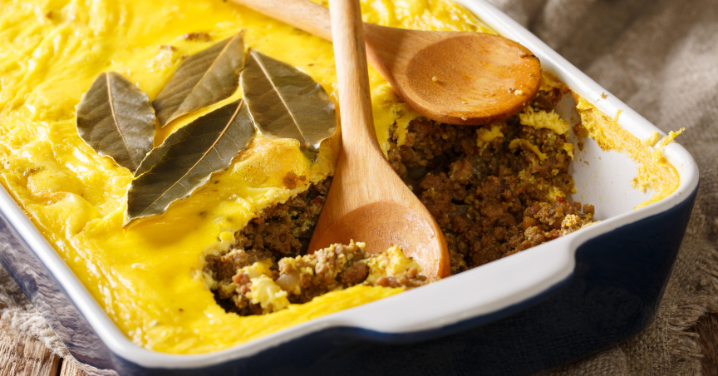
It keeps happening. Every few years, some international food blogger discovers bobotie, declares it a hidden gem, and suddenly South Africa is supposed to care about our national dish again. Except that most of us have never eaten it. Not because it is hard to find outside the Cape (though it is). Not because we are culturally ignorant. But because bobotie lives nowhere in the everyday food lives of most South Africans.
When you ask someone what they ate last week, they say braai, boerie, pap, bunny chow, kota, amagwinya. They do not say bobotie. Bobotie is something your great-aunt makes once yearly, or something fancy restaurants serve while trying too hard to be authentic. It is not home. It is not comfort. It is not the thing you crave on a Tuesday.
Here is the real problem: South Africa is a country of 11 official languages, 11 distinct cultures, and a food landscape that looks like someone threw every continent onto one plate. Our actual food culture is a beautiful, messy, complicated tangle of African, Dutch, French, Indian, Malay, and British influences all fighting about who makes the best version of what. We have pap and offal and curries and seafood and street food and celebration food. We have regional variations and community pride and real meaning baked into everything we eat.
Then someone decided: “The national dish is bobotie.”
A single Cape Malay dish is supposed to represent all of us. A dish most of the country has never tasted is supposed to be a symbol of who we are.
That is not representation. That is just mislabelling.
When your national dish is something you have never had, something you do not know how to make, something that is not part of your lived experience, it sends a quiet message: “This symbol is for someone else. This heritage is somewhere else.” It does not feel like belonging. It feels like being told what to care about.
A braai is genuinely South African. A braai is ritual and hospitality and gathering. It is the one thing that unites South Africans across every language and culture. You argue about meat temperatures, you stand in the smoke, you eat together. That feels like us. But we do not call it the national dish, even though more people have braaiied than have ever tasted bobotie.
The X wars happen every few years. People post their favourite foods and say “I have lived here my whole life and I do not even know what that is.” Everyone agrees. Then we forget and move on, pretending bobotie matters, until next year when some influencer discovers it again.
But what if we actually said no?
What if we looked at what we actually eat, what we actually love, what actually tastes like home, and we chose that instead? A bunny chow is Durban and ingenuity. A kota is Johannesburg and street culture. Amagwinya are celebration and affordability. Pap is the foundation and history. Any of these would be more honest.
Or maybe South Africa does not need one national dish. Maybe we accept that we are a country of many dishes and many stories and that trying to narrow it down to one always feels false. We have 11 languages, multiple holidays, and multiple histories. Why should we have one dish?
Maybe the national dish is not a thing. Maybe it is the practice of gathering, feeding people, taking time, and connecting.
Here is what a real national symbol should do: when someone says it, you feel warm. You feel recognised. You feel like someone just named something true about you. You think of your grandmother or your childhood or Saturday afternoons with people you love.
Most South Africans do not feel that when they hear bobotie.
So I am sticking with #NotMyBobotie. And I suspect I am not the only one.



I’ve eaten it and my mind has not been changed. It’s disgusting. I’m convinced that whoever came up with it, just looked around their pantry/icebox and figured they’d throw everything going rotten into and casserole dish and see how it turned out.