

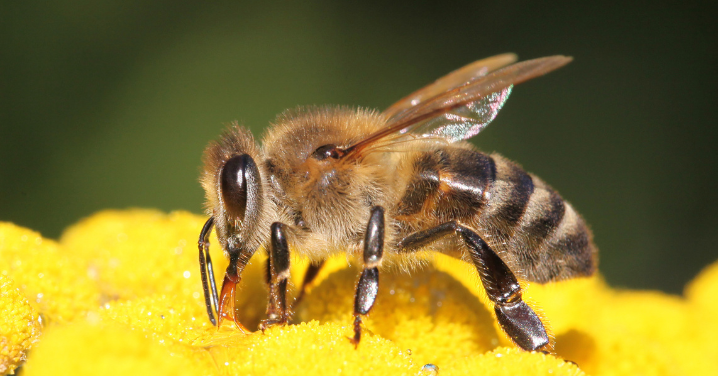
Bees have a serious image problem. Most people’s entire relationship with bees consists of mild panic at a braai and a vague awareness that they make honey. That is doing an enormous disservice to one of the most quietly impressive creatures on the planet, so let’s give them their moment.
For starters, bees have been around for roughly 100 million years, which means they were casually buzzing about while dinosaurs were still the main characters of the planet. That is not just old, that is genuinely ancient survival game recognition, and it deserves some respect.
Here is the bit that always gets me. Bees communicate through dance. Not metaphorically, actually. The famous waggle dance is a bee physically wiggling out directions to the best nectar in the area, like a tiny insect version of Google Maps with better rhythm. Somewhere out there, a bee is essentially doing interpretive dance to tell its coworkers where lunch is, and honestly, more workplaces could benefit from this kind of communication style.
They are also faster than most people give them credit for, capable of flying up to fifteen miles an hour while beating their wings roughly two hundred times a second. On top of that, a single foraging trip can cover up to five miles. For something the size of your fingernail, that is a genuinely impressive commute.
The social structure inside a hive is also worth a mention, mostly because the ladies are running the entire operation. Worker bees, all female, handle the foraging, cleaning and raising of larvae. The queen, also female, is the sole egg layer and can live for up to five years. The males, known as drones, exist for essentially one job, and once that job is done, their role in hive society is fairly limited. Make of that what you will.
Bees are also smarter than their tiny size suggests. Research has shown they can recognise individual human faces, count up to four, and even learn simple tasks like pulling a string to access food. They also learn socially, picking up new behaviours by watching other bees do them first, which is more than can be said for some group chats.
Visually, bees are far more varied than the standard black and yellow stripe we picture. With over 20,000 species worldwide, you get bees in green, blue, red and even a kind of understated purple, quietly running one of nature’s more underrated colour palettes.
Then there is the so called killer bee, a name that has done a lot of unfair reputational damage. Africanized honey bees, as they are properly known, are a hybrid of African and European honey bee strains. Their sting is not actually more dangerous than a regular honeybee’s, they are just significantly more defensive about protecting their hive in numbers. Fair enough, honestly, most of us would defend our home too if enough people kept prodding it.
Honey itself deserves its own moment of appreciation. Properly sealed honey can last almost indefinitely, with archaeologists having found edible honey in ancient Egyptian tombs thousands of years old. Bees make it by collecting nectar, storing it temporarily, passing it between each other to help evaporate excess moisture, then sealing it away in wax honeycomb. It is essentially ancient, edible engineering.
And then there is the part that really matters. Bees are responsible for pollinating roughly a third of the food we eat, from fruit and vegetables to nuts and certain spices. That morning avocado toast, that apple, that almond butter, all of it exists in its current form largely thanks to bees quietly doing their job while nobody claps for them.
If you want to give something back, small gestures go a long way. A simple bee hotel made from bamboo or untreated wood gives solitary bees somewhere safe to lay eggs, and planting native, bee friendly flowers like lavender, sunflowers or sage can turn even a small garden into a genuinely useful bit of habitat.
So the next time a bee shows up uninvited at your table, maybe hold off on the dramatic flailing. That tiny, ancient, oddly brilliant creature is doing far more heavy lifting for this planet than most of us realise.