
Let’s be honest: when most people hear “autism,” they either panic because they do not understand it, or they nod along while thinking about Rain Man. Both reactions are understandable and also kind of missing the point. So let me explain this in a way that actually makes sense.
Autism Spectrum Disorder, or ASD, is a developmental difference that affects how people communicate and interact with others and the world around them. That is it. It is not a disease. It is not something broken that needs fixing. It is just a different operating system. Some people’s brains are Windows, some are Mac, some are autism. They all work, just differently.
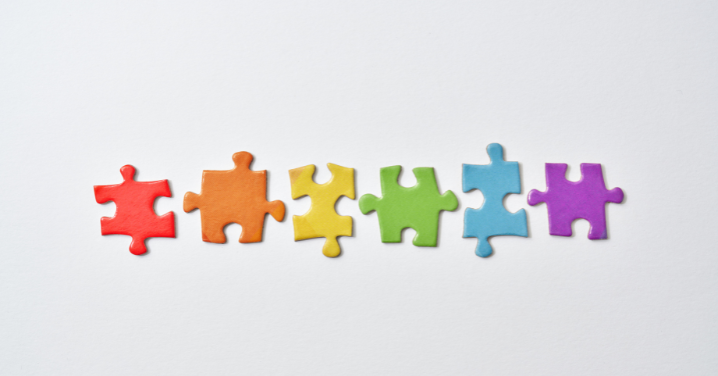
The reason it is called a “spectrum” is because autism is not one-size-fits-all. Imagine a rainbow. Every colour is still a colour, but each one is different. Some people with autism need a lot of support in daily life. Some need barely any. Some speak fluently and can have complex conversations. Some communicate differently, using other methods entirely. Every person on the spectrum is their own unique version of autism. There is no standard autism checklist that applies to everyone.
Now here is where it gets interesting. Autism comes with genuine strengths. Not the “here is the silver lining” kind of nonsense, but actual advantages. Many autistic people have incredible visual skills, musical talent, or the ability to notice patterns and details that everyone else misses. Some can focus intensely on things they care about in a way that would make the rest of us weep with envy. Some can look at a complex problem and see a solution nobody else thought of. That is not a side effect. That is just how their brain works, and it is often brilliant.
The communication thing is where people get confused. Some autistic people talk a lot and can have lengthy conversations. Some use very few words. Some do not speak with their mouths at all but communicate in other ways. And that is fine. There are many ways to connect with someone. Speech is just one of them. The challenge for some autistic people is not always about talking; it is about understanding the unspoken stuff. Tone of voice, facial expressions, body language, sarcasm, social rules that nobody actually wrote down but everyone is supposed to know. These things can be genuinely confusing for autistic brains. Imagine trying to play a game where everyone knows the rules except you, and nobody will explain them. That is kind of what it is like.
Autism also affects how people experience their senses. Some autistic people are hypersensitive, meaning sounds or lights or textures feel overwhelming. A shopping centre with fluorescent lights and people talking can feel like sensory assault. For others, the opposite is true; they need more sensory input to feel engaged. Both extremes are just how their nervous system works. It is not dramatic. It is just real.
Here is what matters: understanding autism is not about pity or inspiration or inspiration porn. It is about recognising that autistic people are not broken versions of neurotypical people. They are just people whose brains work differently. Some of those differences are challenging. Some are genuinely advantageous. Most are just neutral, neither good nor bad, just different.
Getting diagnosed with autism as a child can help because early support and understanding can make life genuinely easier. But you can get diagnosed at any age, and it is never too late to understand yourself better or to find strategies that work for you. Life does not have an expiry date for self-discovery.
Supporting someone on the spectrum is not complicated. Respect their differences. Do not try to force them into your communication style if it does not work for them. Notice what they are good at and let them do more of that. Understand that what looks like rudeness might just be directness. What looks like ignoring you might be sensory overwhelm. Ask questions instead of assuming. And for the love of all that is holy, stop with the inspiration narratives. Autistic people do not exist to teach you lessons about acceptance.
The world is not designed for autistic brains. That is not the autistic person’s problem to solve. That is something the world needs to fix. Ramps are not inspirational; they are just necessary. The same goes for understanding, flexibility, and making space for people who think and communicate differently.
So next time you meet someone who is autistic, remember this: they are not a puzzle to figure out. They are just a person with a different brain. Be kind, be curious, be patient, and let them exist as they are. That is really all anyone is asking for.